The movie is from 1987. Features a cameo from James Randi.

Showing posts with label Magic. Show all posts
Showing posts with label Magic. Show all posts
Monday, 27 July 2015
Invisible Thread
A short movie starring Penn & Teller? How sweet. A simple magic trick saves the world, it might just be plausible.
The movie is from 1987. Features a cameo from James Randi.
The movie is from 1987. Features a cameo from James Randi.

Thursday, 30 October 2014
The Pitchman
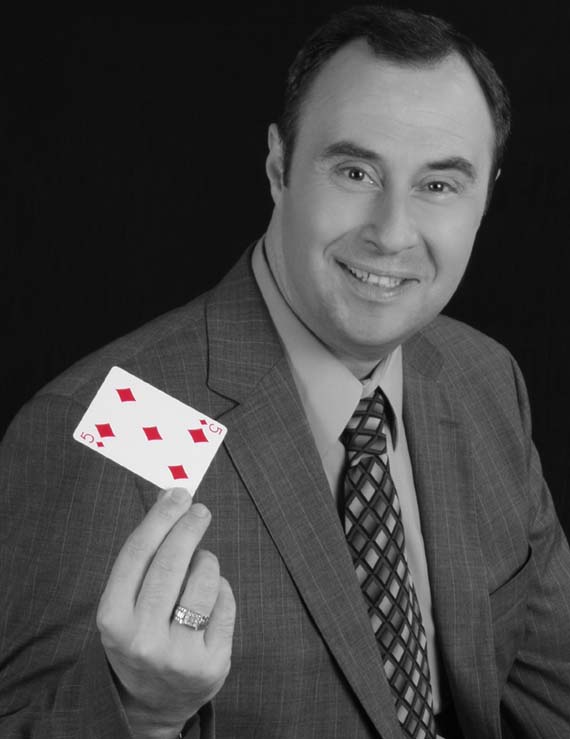 |
| Mark Mason - Pitchman |
eventually magic tricks to magicians. He tells of working on carnival rides in Blackpool and numbers games. Very interesting and worth a watch.
"Mark Mason is "The Pitchman", magic's best salesman. He started out working as a carney, running mock auctions and pitching merchandise around the UK. Now he develops and markets effects for amateur and professional magicians, often hosting the most successful and entertaining booths at the world's biggest magic conventions."
Sunday, 25 May 2014
The Vine Magic of Zach King
 |
| Zach King |
quite stunning venture into magic. It is hypnotic and the 6 second limit makes it very fast paced and also impressive that there is actually 8 minutes of it.
This is a compilation of the magic video editing and creative skill of Zach King.
Saturday, 9 November 2013
38 years of Magic and Bullshit
 |
| Penn & Teller - Young and handsome. |
"Magic can be an intellectual artform because it has a built in irony. The idea of magic is that there is trickery there. The process happening inside spectators is an unwilling suspension of disbelief."
I find this very interesting. Rather than the approach which Penn describes as the style of Doug Henning: This is a dream I had... and then they mutilate some girls. This approach of just come with me on this journey, suspend your disbelief and let yourself slip back into a state of wonder and childlikeness, is just not enough, they claim. Do magicians perhaps use this ruse as a get out of jail free card for not creating effects that connect with Crowds deeply enough for it to matter to them? Or is is a denial of what Teller described as the unwilling suspension of disbelief? The dynamic duo certainly seems to favour the latter.
An style which does not deal with the fact that people expect trickery when watching a magician is simply delusional. Teller further thinks that this is one of magics greatest qualities that it deals with what truth is. Questioning truth and reality is a cornerstone of rational thinking and with it deeply important for all. If one treat magic in this way, which any one who have acctually seen Penn & Tellers work will know that they utilize this philosophy in all that they do, and with great results. Their magic is fresh and honest. You cant help but feel that even though they are constantly fooling you they are not treating you as an idiot. They believe their audience to be made up of thinking individuals. With these key concepts, laid out so well in this interview, one gets a powerful philosophic tool to apply to ones conjuring. With this simple idea you can make your magic both fundamentally interesting and promote questioning rational thinking.
"Watching magic you are always looking with your eyes whilst measuring it against what you know."
Teller
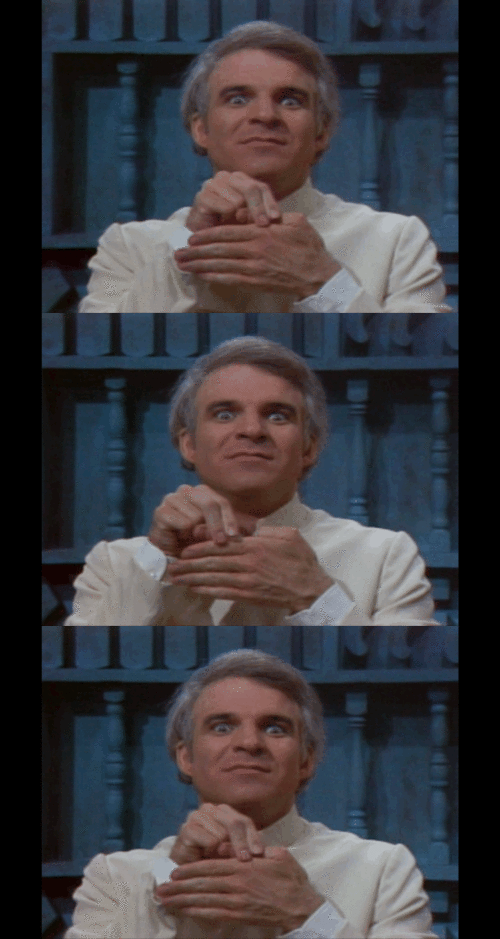
Steve Martin on the Power of tricks.
Teller believes that it is the way magic tricks stimulate the thinking process by showing seemingly impossible things whilst the spectators also knows that this is impossible is fundamental to the appeal of magic. He paraphrases Steve Martin:Steve Martin magic is the lowest art form, something you can do if you have no talent elsewhere.
Teller
“I had loved magic tricks from the time I was six or seven. I bought books on magic. I did magic acts for my parents and their friends. I was aiming for show business from early days, and magic was the poor man's way of getting in: you buy a trick for $2, and you've got an act.”
STEVE MARTIN, Time Magazine, Aug. 24, 1987
"Anyone can do the crappiest magic trick and it still be interesting or have some sort of intellectual component... People get work doing terrible tricks with horrible narratives. "
Teller
If you have mastered tricks, be they magic or circus style skills like juggling or balancing or sideshow style tricks such as the human blockhead or swordswallowing you have an act even if you have no presentation. In many shows this would be all the performer had and the Management would hire a talker which could present the person with the tricky skills. But the point is tricks sell.
When walking down a midway if you here that a man will be swallowing a fragile neon glass tube you don't ask who it is that will do it. If you hear a girl will get stark naked inside this tent you don't need to know who you just want to know how much the ticket is. This is the nature of tricks.
Here he is of course talking of what we here at the Illuminated Showman have written about as the Power of Tricks. The tricks in themselves has a power which truly captivates us. Even when done without narratives, as pure demonstrations of some new found skill, like finding a selected card, have some fascination for us. Thus we can buy a two dollar trick and with no skills of Showmanship go forth and if nothing else gain some attention and notoriety.
Wednesday, 6 November 2013
Nate Staniforth - Magician
Last night as I couldn't sleep I remembered I had been pointed towards a link to a clip about Magician Nate Staniforth by Brian Daly. SO I checked it out. And it was really great. His straight forward and articulate style captured me. He pulls no punches. He does not soften his magic by making silly jokes. Unapolagettically he sells mystery.
Then I watched this. It is the teaser trailer for a web series Nate is doing.
And finally here is a 15min talk he gave in 2011 for Tedx in Iowa. For some reason I cant link to it but you can click this link here.
"What is it about magic and magicians that draws us in? What makes us suspend and challenge our perception of reality? In this TEDx Talk Magician Nate Staniforth shares his passion for using illusion to create a feeling of astonishment and amazement, and how vital this emotion is to the human condition."
Friday, 16 August 2013
Commentary on Lesson 68 - Failure
"Character is created by encountering and overcoming failure."After a comment from a fellow Craft man I thought I would divulge some deeper thoughts on failure and the importance of overcoming it. (Flanagan, this one is for you.)
Those who have seen my Tennis act will be aware of the emphasis I put on chaos and apparent failure and struggle. It is, or should at least be commonly known that making the audience believe you are in some kind of trouble raises their level of attention. If they really believe that the handstand artist had to awkwardly jump down to avoid coming crashing head first onto the stage the Crowd will be on the edge of their seats for his second seat. It will also make his second and successful attempt all the more triumphant. This is, as they say, an old circus trick.
On the other hand, if you appear to pretend to be failing but they can tell that it is nothing but

Pretending to be bad at something needs the most amount of care and rehearsal. Chaos needs to be very carefully practiced and planned.
Most Novice Showmen which sees a more experienced Showman perform a great failure act such as the "bad clown" or the "bad magician" fail to grasp that do be a "bad clown" one actually have to be a good clown and a great Showman. It is not enough to be bad. If you act bad you will be bad and the amount of work available for bad showmen is not enough to get by on. So one has to be good, or perhaps indeed great, to be bad, that is: it is not easy to be bad.
It is often said that people love to see a magician screw up. This is not entirely true, if it is true at all. The only way a Crowd would want to see you actually fail was if you were an asshole. In
that case they would like to see you humiliated. But in any other case it is painful to watch someone die on stage. We are not talking about a Ricky Gervais kind of ironic fail or knowingly being bad, we are talking the magician which with his un-ironic attitude and self important behavior which then spectacularly blunders his tricks. If the Man is unlikable the Show will have to be of exceptional entertainment value, but such is rarely the case.
 Dariel Fitzkee sums up the reason for this in his brilliant exposition Showmanship for Magicians as: "People are more interested in people than in anything else." Darwin Ortiz writes in Strong Magic: "Character fascinates people, and character is revealed under pressure. Most of the time you can maintain a facade in dealing with the world. But, when things go wrong, that's when the real you emerges."
With this in mind the idea that people like watching Showmen in trouble gets a different meaning. No longer are we talking about genuine failure, but the overcoming of obstacles. They want to see you challenged, not to die miserably. (Of course there are master Showmen out there who no doubt can pull of acts where they genuinely fail and still are loved, but isn't perhaps even the likes of Neil Hamburger and Tony Clifton wins in one way or the other? Since they have transcended the fail.)
The bottom line is that Crowds wants to see how you deal with pressure and mounting challenges and the more they like you the more they want you to succeed and therefor the more they will be captivated by a situation that apparently is going awry.
So the advice for the Novice Showman is to not rely on failure since you first need to have the Crowd with you before you can begin laying on the next layer of attention getting technique. Real emotion needs to be stirred in the Crowd, positivity towards you, to be specific before you should delve too deeply into failure.
For an audience to see you in trouble doesn't provide entertainment, it only creates the conditions for entertainment. It generates audience interest. The next question is how you get yourself our of trouble. If you do it by applying your magical skill (if you are a magician) - by doing something impossible - the audience will be pleased. And the more hopeless your situation seems, the more emotionally gratifying it is for the audience when you triumph.

Monday, 11 February 2013
Is Magic Art?
This film created by Dan and Dave features interviews with the cream of modern magicians, all contemplating and giving their thoughtful responses to the question of Art and Craft.
Is Magic Art? from Dan and Dave on Vimeo.
Is Magic Art? from Dan and Dave on Vimeo.
Monday, 31 December 2012
Alan Moore an Illuminated Showman
Alan Moor is a comic book writer. Amongst his most famous are Watchmen, V for Vendetta and the League of Extraordinary Gentlemen. I was watching the documentary The Mindscape of Alan Moore and as he spoke I found myself amazed at how similar our thinking was. He truly is an Illuminated Showman. He too believes that what artists (showmen) does originated in the Shaman, he to believe that we can do real magic, he believes... Just read it for yourselves.
The below quote from the movie summarizes so many of my views it is scary. In the doco he talks about how there comes a time when the world is ripe for a new idea. Like when the steam engine was invented several people came up with it within a few weeks. Perhaps this is one of those. Perhaps we read the same books. Perhaps we both struggle with acceptance of art forms that all too easily are dismissed as "mere entertainment." Read on Illuminated friends and fellow travelers of the Way the words below are spoken by a true Master Showman.

 I believe that all culture must have arisen from cult. Originally all the facets of our culture whether they be in the art or science were the province of the shaman. The fact that in present times this magical power have degenerated to the level of cheap entertainment and manipulation is a tragedy. At the moment the people who are using shamanism and Magic to shape our culture are advertisers. Rather than to trying to wise people up their shamanism is used as an opiate to tranquielize people. To make people more manipulable. Their magic box of tv and by words and by jingles they can make people all over the world to think the same banal words and thoughts all at exactly the same time.
Alan Moore
A clip from a BBC interview with this unique voice of magic and Illuminated Showmanship, Alan Moore.
The below quote from the movie summarizes so many of my views it is scary. In the doco he talks about how there comes a time when the world is ripe for a new idea. Like when the steam engine was invented several people came up with it within a few weeks. Perhaps this is one of those. Perhaps we read the same books. Perhaps we both struggle with acceptance of art forms that all too easily are dismissed as "mere entertainment." Read on Illuminated friends and fellow travelers of the Way the words below are spoken by a true Master Showman.
You have to be very careful with what you say because if you suddenly declare yourself a magician, without any knowledge of what that entitles, you might wake up and find that is exactly what you are.

There is some confusion as to what Magic actually is. I think this can be cleared up if we look at the very earliest descriptions of Magic. Magic, in its earliest form is often referred to as "The Art." I believe this is completely literal. I believe that Magick is art, and the art, whether that is writing, music, sculpture or any other form is literally Magic. Art is, like Magic, the science of manipulating symbols, words or images, to achieve changes in consciousness.
The very language of Magic seems to be talking as much about writing or art as of supernatural events. A Grimoir for example the book of spells is just a fancy way of saying grammar. Indeed to cast a spell is simply to spell, to manipulate words to change peoples consciousness. I believe this is why an artist or writer is the closest thing in the contemporary world to a shaman.
 I believe that all culture must have arisen from cult. Originally all the facets of our culture whether they be in the art or science were the province of the shaman. The fact that in present times this magical power have degenerated to the level of cheap entertainment and manipulation is a tragedy. At the moment the people who are using shamanism and Magic to shape our culture are advertisers. Rather than to trying to wise people up their shamanism is used as an opiate to tranquielize people. To make people more manipulable. Their magic box of tv and by words and by jingles they can make people all over the world to think the same banal words and thoughts all at exactly the same time.
In all of magic there is an incredibly large linguistic component. The Bardic tradition of magick would place a Bard as being much higher and more fearsome than a magician. A magician might curse you and theat might make you hens lay funny, or you might have a child born with a clump foot. If a bard were to place, not a curse upon, but a satire upon you then that could destroy you. If it was a clever satire it might not just destroy you in the eyes of your associates, it would destroy you in the eyes of your family, it would destroy you in your own eyes. If it was a finely worded and clever satire, that might survive and be remembered for decades, even centuries, then years after you were dead people still might be reading it and laughing at you and your wretchedness and absurdity.
Writers and people who had command of words were respected and feared as people who manipulated Magic. In latter times I think the artist and writers have allowed themselves to be sold down the river, they have accepted the prevailing belief that art and writing are merely forms of entertainment, they are not seen as transformative forces that can change a human being, that can change a society. They are seen as simple entertainment. Things with which we can fill twenty minutes half an hour while we are waiting to die.
It is not the job of the artists to give the audience what they want. If the audience knew what they needed then they wouldn't be the audience, they would be the artists. It is the job Artists to give the audience what they need.
Alan Moore
In 1993, on his fortieth birthday, Moore openly declared his dedication to being a ceremonial magician, something he saw as "a logical end step to my career as a writer".[40] According to a 2001 interview, his inspiration for doing this came when he was writing From Hell in the early 1990s, a book containing much Freemasonic and occult symbolism: "One word balloon in From Hell completely hijacked my life… A character says something like, 'The one place gods inarguably exist is in the human mind'. After I wrote that, I realised I'd accidentally made a true statement, and now I'd have to rearrange my entire life around it. The only thing that seemed to really be appropriate was to become a magician."[58]
The Mindscape of Alan Moore (the movie link above) is a 2003 feature documentary which chronicles the life and work of Alan Moore, author of several acclaimed graphic novels, including From Hell, Watchmen and V for Vendetta.
The Mindscape of Alan Moore is Shadowsnake's first completed feature project, part One of the Shamanautical / 5 Elements series. It is the directorial debut of DeZ Vylenz. It is the only feature film production on which Alan Moore has collaborated, with permission to use his work.
Alan Moore presents the story of his development as an artist, starting with his childhood and working through to his comics career and impact on that medium, and his emerging interest in magic.
Saturday, 8 December 2012
Lennart Green
 |
| Lennart Green doctor turned card magician. |
Green's act [is] an heroic display of skill masked by well feigned clumsiness.
Alex Stone, Fooling Houdini.
In 1998 a fumbling swedish doctor arrive on the international magic scene as he took the stage in the close up competition of the FISM or world championship of magic. As Lennart Green began his act he seemed like a likely candidate for disqualification due to lack of training, but as he continued he stumped the judges. The esteemed master magicians judging him became convinced that Lennart was using a trick deck, since there was no other way that he could have done the unbelievable things he did. SO in the end they did disqualify him, not for incompetence but for cheating the magicians.
As it was Lennart hadn't used a trick deck. He had instead been practicing and developing an entire new method for handling cards that would completely alter what magicians believed what could be done with a deck of card.
At the next FISM Lennart Green entered again, performed pretty much the same act, and won.
Here he is. Enjoy.
Wednesday, 28 November 2012
Inventing The Impossible
I have previously posted about Marco Tempest and his inclusion of modern technology in his magic performances. In the video below he give a little insight into his philosophy on creating magic effects and how they cross over with technology.
To start it off he reminds us of Arthur C Clarke's third law:
To start it off he reminds us of Arthur C Clarke's third law:
Any sufficiently advanced technology is indistinguishable from magic.And goes on to describe how people like Robert Houdin and others also tread this line in the golden age of magic.
Magic is a unique tool for previsualizing the future. Magicians show their audiences what it would be like to fly, read minds, have super powers, teleport, disappear and reappear. Magicians are prototyping the future every day.
Marco Tempest
The final illusion he performs is picked straight out of David Brin's latest book Existence. Glasses that can be worn and that shows you a digitally enhanced world. It gives you a map overlay, a yellow brick road, if you will, leading you straight to where you are going or even telling you who the people are that passes you. This is a technology which is currently being developed by google, (check a teaser here) but with magic we can see glimpses of the future now. It might still be crude, but so was the first brick sized mobile phone i had in 1994.
Monday, 19 November 2012
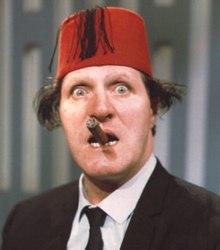
The Art of Tommy Cooper
Tommy Cooper, master of fumbling and rambling magic. This is a great little documentary about a large child.
Tommy Cooper was a national comedy institution whose catchphrases still remain in the language today. This bumbling giant with outsized feet and hands, whose mere entrance on stage had audiences erupting with uncontrollable laughter, was born in Caerphilly in 1921.
This programme looks at the life and art of the man in the fez, whose clumsy, fumbling stage magic tricks hid a real talent as a magician. His private life was complicated and often difficult, but as far as his audiences were concerned, he was first and foremost a clown whose confusion with the mechanisms of everyday life made for hilarious viewing.

BBC2

Friday, 16 November 2012
Dai Vernon: The Spirit Of Magic
Dai Vernon is to magic what James Joyce was to the novel and Einstein to physics.
Max Maven

This is a documentary about the 'Professor' a huge influence of modern magic. Its a bit of a warts and all look at the obsession of a Showman with his Craft.
When Cliff Green, asked Vernon, "What kind of magic do you do?" Vernon responded by asking the boy to name a card. Upon pulling a pack of cards from his pocket, Vernon turned over the top card of the deck to reveal the named card and replied to the speechless Green, "That's the kind of magic I do. What kind of magic do you do?"
{Wiki}
Monday, 13 August 2012
Magic and Truth in The Glass Menagerie
The opening lines of Tennessee William's play goes as follows:
From the fourth scene of The Glass Menagerie we get more about this important symbol in Tennessee's play.
What a great description of the difference between an ordinary magician and an Illuminated Magician.TOM: Yes, I have tricks in my pocket, I have things up my sleeve. But I am the opposite of a stage magician. He gives you illusion that has the appearance of truth. I give you truth in the pleasant disguise of illusion.

From the fourth scene of The Glass Menagerie we get more about this important symbol in Tennessee's play.
LAURA: Where have you been all this time?
TOM: I have been to the movies.
LAURA: All this time at the movies?
TO M: There was a very long programme. There was a Garbo picture and a Mickey Mouse and a travelogue and a newsreel and a preview of coming attractions. And there was an organ solo and a collection for the milk-fund - simultaneously - which ended up in a terrible fight between a fat lady and an usher !
LAURA [innocently]: Did you have to stay through everything?
TOM: Of course ! And, oh, I forgot ! There was a big stage show ! The headliner on this stage show was Malvolio the
Magician. He performed wonderful tricks, many of them, such as pouriing water back and forth between pitchers.
First it turned to wine and then it turned to beer and then it turned to whisky. I knew it was whisky it finally turned
into because he needed somebody to come up out of the audience to help him, and I came up - both shows ! It was
Kentucky Straight Bourbon. A very generous fellow, he gave souvenirs. (He pulls from his back pocket a shimmering
rainbow-coloured scarf.) He gave me this. This is his magic scarf. You can have it, Laura. You wave it over a canary
cage and you get a bowl of gold- fish. You wave it over the gold-fish bowl and they fly away canaries. . . . But the
wonderfullest trick of all was the coffin trick. We nailed him into a coffin and he got out of the coffin without rernoving one nail, [He has come inside.] There is a trick that would come in handy for me - get me out of this 2 by 4 situation ! [Flops on to a bed and starts removing shoes.]
LAURA: Tom ? Shhh'!
TO M: What're you shushing me for?
LAURA: You'll wake up mother.
TOM: Goody, goody ! Pay 'er back for all those 'Rise an' Shines'. [Lies down, groaning.] You know it don't take much intelligence to get yourself into a nailed-up coffin, Laura. But who in hell ever got himself out of one without removing one nail?
[As if in answer, the father's grinning photograph lights up.]
[SCENE DIMS OUT.]
Friday, 13 July 2012
Magician Halts Algerian Revolt

- From the time that the French first claimed Algeria as a territory, the unpredictable and impulsive native population meant trouble to those administrating it. Again and again for obscure, sometimes unstated, reasons the wild tribesman erupted in wild orgies of bloodletting.
- Before the Arab incursions into North Africa in the eighth century, the inhabitants of the region had been pagan. Under Muslim influence, orthodox Sunni Islam became the faith of the larger number of the population, but within the larger body of Muslims a cult of holy men, Marabouts, developed their own variation of Islam. The Marabouts claimed baraka , divine grace, and the ability to perform miracles. While the more orthodox Sunni were located in the urban centers, the Marabouts were well-established in the rural and mountainous areas of Algeria and other parts of North Africa.
- In 1856, the Marabouts, who controlled the will of the tribesmen by dazzling them with feats of magic, had all of Algeria on the brink of revolt.
- The Algerian wizards were highly accomplished, and anyone who commanded their power was listened to attentively. Many of the locals were wholly certain that when a Marabout showed them magic it was the real deal. Tricks such as eating glass without suffering any injury (a standard geek trick) and healing wounds were common practice. Faced with these god-like powers, people were willing not only to sit up and pay attention to the magic itself, but also inclined to go along with what the Marabouts wanted – and what they wanted was the French out of their country.
- In a wise decision the colonial administration decided to try to beat the Marabouts at their own game and sent for Robert-Houdin, who had been entertaining the courts of Europe and had gained a reputation as the greatest magician in all the continent.
Robert-Houdin was small in stature, but to the Arabs who had seen him perform, his magic was as powerful as any of the Marabouts. The diminutive Frenchman had gained his initial success almost immediately after arriving in Algeria. Disguised as an Arab, he and a native confederate stole into one of the magic-religious ceremonies. His professional eyes quickly saw through the trickery of the Marabouts, and he was convinced that he could easily duplicate anything which they had done in the ceremony.
- The next day the colonial administration announced that a "French Marabout" would put the native variety to shame. Curious, nearly every Arab around Algiers turned up for the show.
- Even though Robert-Houdin unmasked every Marabout trick which he had witnessed, the Arabs who had gathered to view his performance remained mostly unimpressed. Only when he produced a small box and called on a fiercely anti-French native to assist him did the little magician raise a murmur of curiosity and excitement from the crowd.
- "Lift this box," he asked the man. The Marabout follower, who was broad through the shoulders with a thick, muscular torso, had no trouble raising the little metal box over his head.
- "Now," said Robert-Houdin, after taking the box from the man, "I will make you as weak as any of your wives,"
- He then began an impromptu magic ritual, bringing his hands around the box several times, chanting incantations before placing the little box on the sand at his feet.
- "Now, see if you can lift it," the little magician said confidently.
- The Arab bent to the sand, grasped the box with both hands, and pulled. It would not budge. Surprised, he threw his strength into it, his strong back and torso straining against the magic box. But as much as he groaned and strained, the box would not budge.
- "By the beard of the prophet," the man exclaimed to those who had gathered, "I cannot lift it from the ground."
- Then, as if he did not believe what he had said, he tried to lift it again. But when he touched it a howl of pain came from his mouth and his body writhed in agony, as he was unable to release his hold on the little iron box.
- The night before, Robert-Houdin had buried a strong electromagnet in the sand, and when the native bent to it the first time, Houdin threw the switch which held the iron box to the ground with enough force to prevent any man from lifting it. The second time Houdin allowed the current to pulse directly through the box, giving the native the first electric shock of his life.
- Mercifully the magician released the switch, and the dazed Arab straightened up slowly. When he had recovered the full use of his senses, the man fled in fear from the magic box which had caused him such pain.
 |
| Marabout teacher, (pic Matt Probert) |

- While still a very young man Robert-Houdin, fell in with a traveling mountebank named Torrini. This man impressed upon the young magician the difference between an exhibitionist and a showman. Torrini also taught Robert-Houdin the trick which was destined to make him famous.
- Tonini had his apprentice mark a bullet with a scratch mark, then he apparently loaded a pistol with it and had Robert-Houdin fire at him from point blank range. To the young man's surprise, the bullet appeared between Tonini's teeth, easily identifiable by the scratch mark which had been etched into it. The older magician had switched hullets, substituting a metallic ball which shattered on contact with anything solid and had palmed the original marked bullet into his mouth.
- The Marabouts had responded as hoped to Robert-Houdin's first performances in Algiers, but the core of the rebellion, forever moving across the desert sands, had not been present to become impressed by the demonstration.
- Robert-Houdin resolved that he would seek out the most powerful of the Marabouts and discredit them with superior feats of magic. To this end he began a trek across the desert. traveling without a military escort, putting on shows wherever enough Arabs would gather.
- For several weeks Robert-Houdin moved over the sands, finding only a few scattered groups of Marabouts to dazzle with his magical brilliance. Then, through an informant, he learned where the main force of the rebellion had gathered.
- Traveling to the obscure desert oasis, Robert-Houdin was greeted by the chief magician of this particular Marabout group, who waved a pistol in his face.
- "You will die tonight," was the hostile man's promise.
- The little Frenchman seemed unperturbed. But the entire Arab camp had come under the power of this magician, and Robert-Houdin knew that he had little chance to escape alive if he failed to impress them.
- Forever a showman, Robert-Houdin did not let his confidence slide. When he was threatened with the pistol again, he told the Marabout to remove the bullet then to give him the pistol.
- Morbidly curious, the man complied, watching carefully as Robert-Houdin began going through a magic ritual, waving his hands over the pistol.
- "Now put a mark on the bullet and shoot me if you must," he commanded the Arab magician. Once again the Marabout complied, claiming the pistol immediately after the Frenchman had dropped the bullet down the barrel.
- "Now you will die," the Marabout repeated his promise.
- He pointed the gun at Robert-Houdin and discharged it at point blank range.
- Blood spurted from the magician's chest, and Robert-Houdin staggered, nearly falling. Then, miraculously, he regained his balance and spat the marked bullet from his mouth, so that it landed at the feet of one of the most important sheiks. The desert chief picked up the ball and found the mark which the Marabout had scratched into its side.
- ''This is real magic," the sheik told the Marabout contemptuously.
- With the Marabouts discredited, the rebellion in Algeria fell apart. Robert-Houdin had received the recognition he craved by doing his former master, Torrini, one better. He had loaded the hollow metallic cartridge with blood so it would splatter when it hit his chest. To the Arabs, the "French Marabout" had powers which exceeded any of their own.
- The scroll Robert-Houdin received in recognition of his services is
still on display in the American Museum of Magic in Marshall, Missouri.
He wrote this and many other tales into his memoirs, The king of the
conjurers (1859). The book became required reading for many aspiring
magicians, and for one of them its effect was profound.
Young magician Erich Weiss, who was born in Hungary but whose parents moved to Wisconsin when he was four, was so impressed by the French conjurer’s feats that Robert-Houdin at once became his hero, to the point where he even based his stage name on the French master – and thus was Harry Houdini born. Robert-Houdin died in 1871, but he has been truthfully referred to as the father of modern magic.
So, that’s how one retired magician averted a war in Algeria in 1856 – a case of brilliant conjuring versus supposedly real magic. But some of you are probably feeling cheated – what about the real thing? - (The above story has been pieced together from three sources. Brad Steiger, an article from Fortean Times, and finally from Whiskey and Gunpowder.
- POST SCRIPT (from flixist)
- There's a line from David Hughes's Tales from Development Hell that captures the whole absurd process of failed film development: "This [script] is perfect. Who can we get to rewrite it?"
 |
| Robert Houdin |
 |
|
This is the public
"dragons" display at
Jean Eugène Robert-Houdin's house in
Blois, which has been turned into a
museum. The "dragons" move
in and
out of the windows in a theatrical
display.
A statue of Robert-Houdin is at lower right.
|
Smoke and Mirrors was a hot property when the first draft hit in 1993, but then after years and years of rewrites, recasting (Sean Connery was interested at one point and got some rewrites, then ditto later on with Michael Douglas and Catherine Zeta Jones), and so on, the film vanished. Almost 20 years after that first draft was the hottest thing around, Lee and Janet Scott Batchler still think the movie may yet be made.
The fitting title of that first chapter: "Disillusioned."

Friday, 29 June 2012
Tellers Seven Secrets of Magic
For those amongst you which dabble in the arts of prestidigitation these Secrets are important, but the core principals are worth taking note of for any Showman. The advice comes from Teller, probably most famous for being the silent part of the dynamic magic duo Penn and Teller.
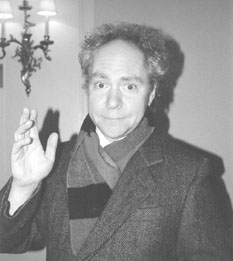
Teller "Teller (born Raymond Joseph Teller; February 14, 1948) is an American magician, illusionist, comedian, writer, and the frequently silent half of the comedy magic duo Penn & Teller, along with Penn Jillette. Teller is an atheist, debunker, skeptic, and a fellow of the Cato Institute (a free market libertarian think tank which also lists his partner Penn Jillette as a fellow). The Cato Institute Association is featured prominently in the Penn and Teller Showtime TV series Bullshit!. He legally changed his name to just "Teller"."
Wikipedia
Teller shared his Secrets of Magic in a fine article from the Smithsonian Magazine. You can read the full article here.
1. Exploit pattern recognition. I magically produce four silver dollars, one at a time, with the back of my hand toward you. Then I allow you to see the palm of my hand empty before a fifth coin appears. As Homo sapiens, you grasp the pattern, and take away the impression that I produced all five coins from a hand whose palm was empty.
2. Make the secret a lot more trouble than the trick seems worth. You will be fooled by a trick if it involves more time, money and practice than you (or any other sane onlooker) would be willing to invest. My partner, Penn, and I once produced 500 live cockroaches from a top hat on the desk of talk-show host David Letterman. To prepare this took weeks. We hired an entomologist who provided slow-moving, camera-friendly cockroaches (the kind from under your stove don’t hang around for close-ups) and taught us to pick the bugs up without screaming like preadolescent girls. Then we built a secret compartment out of foam-core (one of the few materials cockroaches can’t cling to) and worked out a devious routine for sneaking the compartment into the hat. More trouble than the trick was worth? To you, probably. But not to magicians.
3. It’s hard to think critically if you’re laughing. We often follow a secret move immediately with a joke. A viewer has only so much attention to give, and if he’s laughing, his mind is too busy with the joke to backtrack rationally.
4. Keep the trickery outside the frame. I take off my jacket and toss it aside. Then I reach into your pocket and pull out a tarantula. Getting rid of the jacket was just for my comfort, right? Not exactly. As I doffed the jacket, I copped the spider.
5. To fool the mind, combine at least two tricks. Every night in Las Vegas, I make a children’s ball come to life like a trained dog. My method—the thing that fools your eye—is to puppeteer the ball with a thread too fine to be seen from the audience. But during the routine, the ball jumps through a wooden hoop several times, and that seems to rule out the possibility of a thread. The hoop is what magicians call misdirection, a second trick that “proves” the first. The hoop is genuine, but the deceptive choreography I use took 18 months to develop (see No. 2—More trouble than it’s worth).
6. Nothing fools you better than the lie you tell yourself. David P. Abbott was an Omaha magician who invented the basis of my ball trick back in 1907. He used to make a golden ball float around his parlor. After the show, Abbott would absent-mindedly leave the ball on a bookshelf while he went to the kitchen for refreshments. Guests would sneak over, heft the ball and find it was much heavier than a thread could support. So they were mystified. But the ball the audience had seen floating weighed only five ounces. The one on the bookshelf was a heavy duplicate, left out to entice the curious. When a magician lets you notice something on your own, his lie becomes impenetrable.
7. If you are given a choice, you believe you have acted freely. This is one of the darkest of all psychological secrets. I’ll explain it by incorporating it (and the other six secrets you’ve just learned) into a card trick worthy of the most annoying uncle.
Wednesday, 20 June 2012
Art is the most Beautiful of All Lies
The theme of lies and deceits and the peculiar truths that can be revealed through them is a favorite here on the Illuminated Showman. When I woke at five in the morning due to jet lag and trawled the digital showground for inspiring showmen I was quite pleased to find magician Marco Tempest's performance at TED: Edinburgh in 2011. In it he uses three iPods in a sweet mix of Real Magic and digital wizardry. Something about this brings Arthur C. Clarke's third Law to mind.
Claude Debussy said: "Art is the greatest deception of all." Marco Tempest adds:
"Art is a deception that creates real emotion. A lie that creates a truth, and when you give yourself over to that deception it becomes magic."
(The rest of the Debussy quote goes as follows:
Art is the greatest deception of all. And although people try to incorporate the everyday events of life in it, we must hope that it will remain a deception lest it become a utilitarian thing, sad as a factory. ... Let us not disillusion anyone by bringing too much reality into the dream.)
"Any sufficiently advanced technology is indistinguishable from magic."In the following clip Marco Tempest beautifully blurs the line of magic and technology.
Claude Debussy said: "Art is the greatest deception of all." Marco Tempest adds:
"Art is a deception that creates real emotion. A lie that creates a truth, and when you give yourself over to that deception it becomes magic."
(The rest of the Debussy quote goes as follows:
Art is the greatest deception of all. And although people try to incorporate the everyday events of life in it, we must hope that it will remain a deception lest it become a utilitarian thing, sad as a factory. ... Let us not disillusion anyone by bringing too much reality into the dream.)
Thursday, 7 June 2012
Steal like an Artist
So thoughts about originality and 'borrowing' material to get started as a showman has been milling around my brain.
My first acts as an assistant in my dad's magic show were all so called packet tricks. Torn and restored paper, some rope tricks, milk pitcher etc, standard tricks you can buy in any magic shop. With magic the game is a little different than with circus acts. Many professional magicians makes a good living from selling their original ideas and the workings of effects, often complete with suggested patter and presentation.
As we all know its not enough to do a magic trick, or juggle three balls, or balance an ax on your chin, to make a crowd like you and bookings fill your calender. There is more to it than that. Many people say it and I heard it first from my dad, the Great Santini:
"It is not what you do, but how you do it that matters."
 Ultimately people don't care about whether you can juggle the three machetes, or make the little red silk disappear, but if they like you and you care about it, then you can make them care too. So it's not enough to have an act, you need to work on the presentation. Make it ring true for an audience. Whether you learnt it from a magic book or you "created it all," it must be real so that when you present it it becomes genuine. If you manage that your act will become Truth for the crowd, and Crowds love Truth.
To do so you have to do more than just present a series of tricks. You need to have thought about what it is you want to achieve. Consider what you want the Crowd to be left with after they have seen it.
Of course if juggling or magic is only going to be your hobby or you are only interested in it for the sake of the art, then all bets are off, you can then spend as much time as you want going in any direction you want. But if you do want to use these skills to connect with a crowd you need to think of how to make your acts go beyond mere presentation of skill and become engaging for an audience.
This is a very difficult task, particularly if you're just starting out, therefor it is OK even recommended, or at least accepted, for Novice Showmen to mine material from the collective pool of stock tricks and acts. But it is important to remember that unless you graduate from the tried and tested routines and put your own personal stamp on them, transform them so that YOU become the main part of the act, not your tricks, you will have trouble getting recognition as an artist and often you'll also have trouble getting other work than tiny shows at provincial shopping malls. Not to say there is not great art and good times to be had at such places.
I cut my teeth at places like Aksdal Senter. A shopping mall in a tiny village not too far from where I grew up, not so much a village as a cluster of houses next to the intersection of highway that goes to Stavanger and Oslo. Doing those shows strengthened the Funny Bones I now stand on. But I wanted more than that. I took the lessons and moved on. I found my own style, it took a long time, but I found it. And if I can find it, anyone can.
As the song says: "If you can make it here, you can make it anywhere."
(Although said about a slightly bigger city than Aksdal...)
Here is a key excerpt from the gloriously enlightening movie Funny Bones about this particular issue of borrowing to get a head start and the terrible fact of life that many of our fellow performers never goes beyond this initial Novice Showman stage. They never find a Master, a mentor that can take them under their wing and show them the ropes, to make them Apprentice Showmen. On our own we stumble blindly in the dark. Learning and to some extent stealing from our idols can make us who we are. But the important thing is to steal like an artist: copy, combine and transform. Don't rip off.
The following is a conversation between Oliver Platt as Tommy Fawkes as he learns that his dad, Mr Originality himself stole material. The father is played by Jerry Lewis.
 |
| Santini's Magi Show circa 1990. |
As we all know its not enough to do a magic trick, or juggle three balls, or balance an ax on your chin, to make a crowd like you and bookings fill your calender. There is more to it than that. Many people say it and I heard it first from my dad, the Great Santini:
"It is not what you do, but how you do it that matters."
Ultimately people don't care about whether you can juggle the three machetes, or make the little red silk disappear, but if they like you and you care about it, then you can make them care too. So it's not enough to have an act, you need to work on the presentation. Make it ring true for an audience. Whether you learnt it from a magic book or you "created it all," it must be real so that when you present it it becomes genuine. If you manage that your act will become Truth for the crowd, and Crowds love Truth.To do so you have to do more than just present a series of tricks. You need to have thought about what it is you want to achieve. Consider what you want the Crowd to be left with after they have seen it.
Of course if juggling or magic is only going to be your hobby or you are only interested in it for the sake of the art, then all bets are off, you can then spend as much time as you want going in any direction you want. But if you do want to use these skills to connect with a crowd you need to think of how to make your acts go beyond mere presentation of skill and become engaging for an audience.
This is a very difficult task, particularly if you're just starting out, therefor it is OK even recommended, or at least accepted, for Novice Showmen to mine material from the collective pool of stock tricks and acts. But it is important to remember that unless you graduate from the tried and tested routines and put your own personal stamp on them, transform them so that YOU become the main part of the act, not your tricks, you will have trouble getting recognition as an artist and often you'll also have trouble getting other work than tiny shows at provincial shopping malls. Not to say there is not great art and good times to be had at such places.
 |
| Aksdal Shopping centre. |
As the song says: "If you can make it here, you can make it anywhere."
(Although said about a slightly bigger city than Aksdal...)
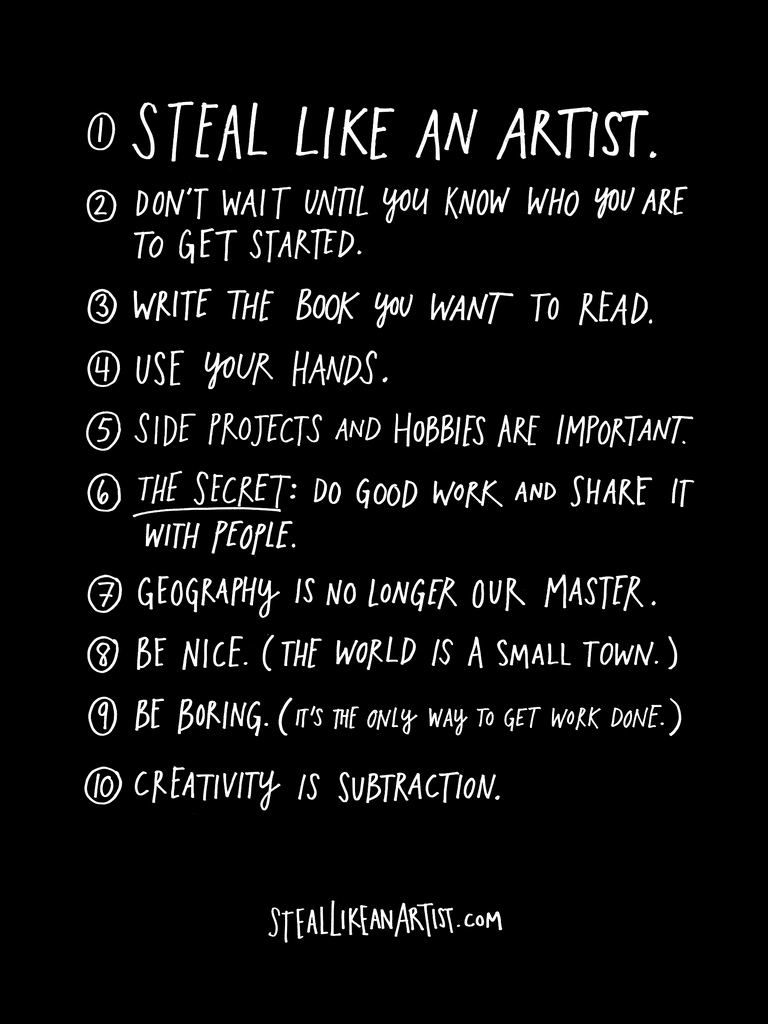 |
| Inspiring words from Austin Kleon. Worth checking out! |
Here is a key excerpt from the gloriously enlightening movie Funny Bones about this particular issue of borrowing to get a head start and the terrible fact of life that many of our fellow performers never goes beyond this initial Novice Showman stage. They never find a Master, a mentor that can take them under their wing and show them the ropes, to make them Apprentice Showmen. On our own we stumble blindly in the dark. Learning and to some extent stealing from our idols can make us who we are. But the important thing is to steal like an artist: copy, combine and transform. Don't rip off.
The following is a conversation between Oliver Platt as Tommy Fawkes as he learns that his dad, Mr Originality himself stole material. The father is played by Jerry Lewis.
 |
| Mr Originality stole material? |
"Why did you steal their whole act?

Because you loved them so much?"

"No, because I wanted a new act

that no one had seen in the States.

I was ambitious. Is that a crime?

Did you never steal material, son?

I knew their act.

It was a way in for me. Just a way in.

I did it a couple of years,

then I became a joke man.

Let me tell you something straight.
 |
| Tommy Fawkes in his fathers footsteps. |
About what kills me.

It kills me that I got lazy,

using writers, not using me.

We were funny! We didn't have to tell

funny stories. We were funny.

We had funny bones!

And what kills me most is watching

my own son flop time after time.

However much I spent on writers and

coaches, it hasn't worked for you.

It's like you're too educated

to be funny.

All this analysis. I did that!

There are two types of comedians.

A funny bones comedian,

and a non-funny bones comedian.

They're both funny.

One is funny, the other tells funny.

And Tommy...
It's time you knew...and this

kills me the most,

You're not funny."
Saturday, 26 May 2012
The Oldest Trick in the Book
 |
| Magicians? |
"The cemetery — called Beni Hasan (also Bani Hasan, or Beni-Hassan) — contains 150 tombs, and the image of the jugglers is found in what is known as the 15th tomb. The tomb dates back to around 4,000 years ago, between 1994 and 1781 B.C.

Even if we disregard the interpretation of the hieroglyphs as magicians the cups and balls still remains the earliest trick depicted. In a 15th century painting by Hieronymus Bosch we see the trick portrayed so there is no doubt of what's going on.
 |
| The Conjuror - circa 1474 |


In the following clip the brilliant magical duo of Penn and Teller pays homage to the archeological depictions and a trick with a very rich history, with characteristically irreverent and clever versions of the routine.
Sunday, 18 December 2011
Real Magic
My father is a magician and when I was in school a kid in my class asked if my father did Real Magic. This puzzled me deeply.
The kid wanted to know whether Dad performed Miracles or if he had supernatural powers, which he didn't. But I also knew that the type of Magic Dad did was the only type of Magic you'd actually see anywhere. So it struck me as strange that the other type of Magic, the one you only read about in fairy tales, the Bible or on the Internet somehow had gotten the prefix real. When I finally answered the kid I said: "Yes, my Dad does Real Magic." In hindsight I think it that was at this moment I became a Showman.
What stumped me was not so much the answer but the question. It was the wrong question for the answer he wanted. Within the perimeter fences of the Carnival there is no separation between Fact and Art. Asking the wrong questions; how did you do it? is it real? is it a man or a woman? does not make sense. It is a space where both answers are true. (Schrodinger's cat...) A space where walking through the red velvet curtains is walking through a slit in the fabric of reality itself. Like in wrestling rings, churches, synagogues, and cinemas we can safely suspend our disbelief and experience Magical Reality, and be enriched as humans from the experience. It is a space where things does not need to be scrutinized, and taken apart. If we try, we become like the clown pulling apart an onion. Peeling away layer after layer he searches for the kernel of truth, but in the end nothing is left but the tears on his cheeks and the burning in his eyes.
Real Magic is
Something people experience. A human emotion. An innate state of mind which one human can bring forth in others.
If magic happens and no human is around to experience it, is it still Magic?
The apostle Mathew said: "Whenever two or more of you gather, I am amongst you," that is Jesus speaking on behalf of the Holy Ghost, I think. Magic happens when we gather. Religious experiences are amplified when there is more of us. Like rituals of the old shamans going into trance surrounded by his tribe.
Do horses enjoy card tricks? Does a dog distinguish between telepathy and texting on a mobile phone? If Asimov's third law, "Any sufficiently advanced technology will be indistinguishable from magic", holds true, i would presume the canine experiences Magic ALL the TIME.
Magic is defined as: the power of apparently influencing the course of events by using mysterious or supernatural forces.
Mysterious is defined as: difficult or impossible to understand, explain, or identify.
Supernatural is defined as: (of a manifestation or event) attributed to some force beyond scientific understanding or the laws of nature.
I believe Real Magic is Mysterious but not supernatural. I don't believe there is anything supernatural. How can there be anything but the natural? If it exists it is natural to me. The artificial is also fundamentally natural, distinguished only by being made by man. I believe the Supernatural, what isn't complete humbug, is what lies beyond the current understanding of science but not outside the laws of nature. Nothing lies beyond the laws of nature. If it actually exists - it obeys the laws of nature.
You can choose to obey the laws of Gods but there is no choice in obeying the laws of Nature.
Super comes from Latin and means above or beyond. Super Natural, Beyond or Above nature. What lies above and beyond nature does not exist, but still I think there might be another world out there beyond Nature. That is the world of Imagination. A human realm. Limbo, a world between, where what does not exist can be brought into existence. Because we can make our imagination real. We can materialize our ideas. When we make an act, when we write a song, when we draw a plan and build something. It is artificial but intrinsically interwoven with the natural world through us. Through our Will and our hands we manifest ideas, hopes and dreams through inventions, illusions, rides, thrills, chills, architecture, culture and art. That, surely, is Real Magic.
To me
Real magic is created walking
hand in hand with a child,
through a pine forest at night,
carrying a flickering latern to
fight off the shadows.
In a dog eat dog world
where survival of the fittest makes
the origins of altruism difficult to understand
Real Magic is random acts of kindness to strangers.
A seemingly random group of people
Gathered in a darkened room
Rubbing crystallized rosin from a tree
onto hairs from the tail of a horse
And then stroking the tail against tightly wound catgut strings
Following directions and diagrams imagined by a man that
Died more than five hundred years ago.
The fact that the results of the music they create
Still conjurs up thoughts of
Love, hope and truth in us today.
That’s real magic.
For what is magic if its not to be able to produce change in people
Make them think, want and feel beautiful emotions and inspirational desires.
Real magic is created by people
Real magic happens in people
My Dad is a magician,
he does Real Magic.
and now I want to do Real Magic too.
The kid wanted to know whether Dad performed Miracles or if he had supernatural powers, which he didn't. But I also knew that the type of Magic Dad did was the only type of Magic you'd actually see anywhere. So it struck me as strange that the other type of Magic, the one you only read about in fairy tales, the Bible or on the Internet somehow had gotten the prefix real. When I finally answered the kid I said: "Yes, my Dad does Real Magic." In hindsight I think it that was at this moment I became a Showman.
What stumped me was not so much the answer but the question. It was the wrong question for the answer he wanted. Within the perimeter fences of the Carnival there is no separation between Fact and Art. Asking the wrong questions; how did you do it? is it real? is it a man or a woman? does not make sense. It is a space where both answers are true. (Schrodinger's cat...) A space where walking through the red velvet curtains is walking through a slit in the fabric of reality itself. Like in wrestling rings, churches, synagogues, and cinemas we can safely suspend our disbelief and experience Magical Reality, and be enriched as humans from the experience. It is a space where things does not need to be scrutinized, and taken apart. If we try, we become like the clown pulling apart an onion. Peeling away layer after layer he searches for the kernel of truth, but in the end nothing is left but the tears on his cheeks and the burning in his eyes.
Real Magic is
Something people experience. A human emotion. An innate state of mind which one human can bring forth in others.
If magic happens and no human is around to experience it, is it still Magic?
The apostle Mathew said: "Whenever two or more of you gather, I am amongst you," that is Jesus speaking on behalf of the Holy Ghost, I think. Magic happens when we gather. Religious experiences are amplified when there is more of us. Like rituals of the old shamans going into trance surrounded by his tribe.
Do horses enjoy card tricks? Does a dog distinguish between telepathy and texting on a mobile phone? If Asimov's third law, "Any sufficiently advanced technology will be indistinguishable from magic", holds true, i would presume the canine experiences Magic ALL the TIME.
Magic is defined as: the power of apparently influencing the course of events by using mysterious or supernatural forces.
Mysterious is defined as: difficult or impossible to understand, explain, or identify.
Supernatural is defined as: (of a manifestation or event) attributed to some force beyond scientific understanding or the laws of nature.
I believe Real Magic is Mysterious but not supernatural. I don't believe there is anything supernatural. How can there be anything but the natural? If it exists it is natural to me. The artificial is also fundamentally natural, distinguished only by being made by man. I believe the Supernatural, what isn't complete humbug, is what lies beyond the current understanding of science but not outside the laws of nature. Nothing lies beyond the laws of nature. If it actually exists - it obeys the laws of nature.
You can choose to obey the laws of Gods but there is no choice in obeying the laws of Nature.
Super comes from Latin and means above or beyond. Super Natural, Beyond or Above nature. What lies above and beyond nature does not exist, but still I think there might be another world out there beyond Nature. That is the world of Imagination. A human realm. Limbo, a world between, where what does not exist can be brought into existence. Because we can make our imagination real. We can materialize our ideas. When we make an act, when we write a song, when we draw a plan and build something. It is artificial but intrinsically interwoven with the natural world through us. Through our Will and our hands we manifest ideas, hopes and dreams through inventions, illusions, rides, thrills, chills, architecture, culture and art. That, surely, is Real Magic.
To me
Real magic is created walking
hand in hand with a child,
through a pine forest at night,
carrying a flickering latern to
fight off the shadows.
In a dog eat dog world
where survival of the fittest makes
the origins of altruism difficult to understand
Real Magic is random acts of kindness to strangers.
A seemingly random group of people
Gathered in a darkened room
Rubbing crystallized rosin from a tree
onto hairs from the tail of a horse
And then stroking the tail against tightly wound catgut strings
Following directions and diagrams imagined by a man that
Died more than five hundred years ago.
The fact that the results of the music they create
Still conjurs up thoughts of
Love, hope and truth in us today.
That’s real magic.
For what is magic if its not to be able to produce change in people
Make them think, want and feel beautiful emotions and inspirational desires.
Real magic is created by people
Real magic happens in people
My Dad is a magician,
he does Real Magic.
and now I want to do Real Magic too.
Subscribe to:
Posts (Atom)