
 |
| Penn & Teller - Young and handsome. |
"Magic can be an intellectual artform because it has a built in irony. The idea of magic is that there is trickery there. The process happening inside spectators is an unwilling suspension of disbelief."
I find this very interesting. Rather than the approach which Penn describes as the style of Doug Henning: This is a dream I had... and then they mutilate some girls. This approach of just come with me on this journey, suspend your disbelief and let yourself slip back into a state of wonder and childlikeness, is just not enough, they claim. Do magicians perhaps use this ruse as a get out of jail free card for not creating effects that connect with Crowds deeply enough for it to matter to them? Or is is a denial of what Teller described as the unwilling suspension of disbelief? The dynamic duo certainly seems to favour the latter.
An style which does not deal with the fact that people expect trickery when watching a magician is simply delusional. Teller further thinks that this is one of magics greatest qualities that it deals with what truth is. Questioning truth and reality is a cornerstone of rational thinking and with it deeply important for all. If one treat magic in this way, which any one who have acctually seen Penn & Tellers work will know that they utilize this philosophy in all that they do, and with great results. Their magic is fresh and honest. You cant help but feel that even though they are constantly fooling you they are not treating you as an idiot. They believe their audience to be made up of thinking individuals. With these key concepts, laid out so well in this interview, one gets a powerful philosophic tool to apply to ones conjuring. With this simple idea you can make your magic both fundamentally interesting and promote questioning rational thinking.
"Watching magic you are always looking with your eyes whilst measuring it against what you know."
Teller
Steve Martin on the Power of tricks.
Teller believes that it is the way magic tricks stimulate the thinking process by showing seemingly impossible things whilst the spectators also knows that this is impossible is fundamental to the appeal of magic. He paraphrases Steve Martin:Steve Martin magic is the lowest art form, something you can do if you have no talent elsewhere.
Teller
“I had loved magic tricks from the time I was six or seven. I bought books on magic. I did magic acts for my parents and their friends. I was aiming for show business from early days, and magic was the poor man's way of getting in: you buy a trick for $2, and you've got an act.”
STEVE MARTIN, Time Magazine, Aug. 24, 1987
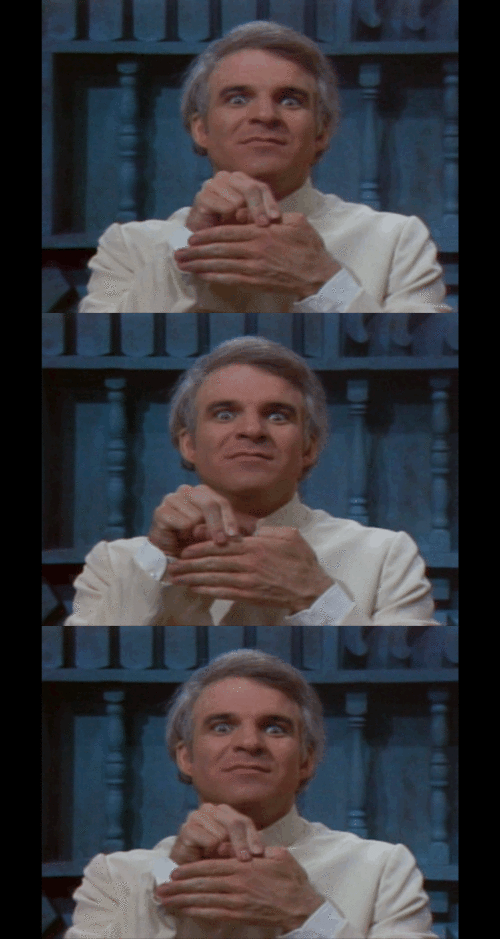
"Anyone can do the crappiest magic trick and it still be interesting or have some sort of intellectual component... People get work doing terrible tricks with horrible narratives. "
Teller
If you have mastered tricks, be they magic or circus style skills like juggling or balancing or sideshow style tricks such as the human blockhead or swordswallowing you have an act even if you have no presentation. In many shows this would be all the performer had and the Management would hire a talker which could present the person with the tricky skills. But the point is tricks sell.
When walking down a midway if you here that a man will be swallowing a fragile neon glass tube you don't ask who it is that will do it. If you hear a girl will get stark naked inside this tent you don't need to know who you just want to know how much the ticket is. This is the nature of tricks.
Here he is of course talking of what we here at the Illuminated Showman have written about as the Power of Tricks. The tricks in themselves has a power which truly captivates us. Even when done without narratives, as pure demonstrations of some new found skill, like finding a selected card, have some fascination for us. Thus we can buy a two dollar trick and with no skills of Showmanship go forth and if nothing else gain some attention and notoriety.


