Showing posts with label original acts. Show all posts

Sunday, 30 December 2012

Austin Kleon - Steal Like an Artist

I have previously blogged a post with the title steal like an artist, and this title was artistically stolen from Austin Kleon, the guy in the talk below.
Kleon is an interesting dude, with ideas I very much concur with. In the clip he describes one of his own "original" ideas: What he calls Newspaper Blackout... Someone then tells him that his idea actually was someone elses. Austin Kleon then traces the history of his "Original" idea back almost 300 years.
The ideas he talks about are also similar to what I wrote about in my post about Originality. I find it refreshing to hear someone talk about inspiration/stealing like this. It will cure any one suffering from writers block or show-material-constipation.
Where do you get your ideas? The honest artist answer is I steal them. How does an artist look at the world. Well, first you figure out what's worth stealing and then you move on to the next thing.
There's an economic theory out there that says: if you average the wages of your five closest friends you will be close to your own. The same is true for ideas. You are only as good as the stuff you surround yourself with.
If you try to devour the history of what you do in one sitting you're going to choke. So I think the best thing to do is to start chewing on one thinker you really love. Completely saturate yourself with their work, find out everything there is to know about their work. Then you find three thinkers that influenced your favorite thinker and find out everything you can about them. And repeat that as many times as you can. Build your own family tree and climb it as far up as you can. And once you have a family tree it is time to start your own branch. Seeing yourself as part of a lineage makes you feel less alone.
Austin Kleon.
So go on, read books, watch films of all the best artists and get those creative juices flowing. Go forth and surround yourself with all the best stuff and steal, transform and make your own fusion of all the art you love.


If you like his ideas, his art and his approach to creativity there is a longer and slightly more detailed talk here.


Thursday, 7 June 2012

Steal like an Artist

So thoughts about originality and 'borrowing' material to get started as a showman has been milling around my brain.
Santini's Magi Show circa 1990.
My first acts as an assistant in my dad's magic show were all so called packet tricks. Torn and restored paper, some rope tricks, milk pitcher etc, standard tricks you can buy in any magic shop. With magic the game is a little different than with circus acts. Many professional magicians makes a good living from selling their original ideas and the workings of effects, often complete with suggested patter and presentation.
As we all know its not enough to do a magic trick, or juggle three balls, or balance an ax on your chin, to make a crowd like you and bookings fill your calender. There is more to it than that. Many people say it and I heard it first from my dad, the Great Santini:

"It is not what you do, but how you do it that matters."

Ultimately people don't care about whether you can juggle the three machetes, or make the little red silk disappear, but if they like you and you care about it, then you can make them care too. So it's not enough to have an act, you need to work on the presentation. Make it ring true for an audience. Whether you learnt it from a magic book or you "created it all," it must be real so that when you present it it becomes genuine. If you manage that your act will become Truth for the crowd, and Crowds love Truth.
To do so you have to do more than just present a series of tricks. You need to have thought about what it is you want to achieve. Consider what you want the Crowd to be left with after they have seen it.
Of course if juggling or magic is only going to be your hobby or you are only interested in it for the sake of the art, then all bets are off, you can then spend as much time as you want going in any direction you want. But if you do want to use these skills to connect with a crowd you need to think of how to make your acts go beyond mere presentation of skill and become engaging for an audience.
This is a very difficult task, particularly if you're just starting out, therefor it is OK even recommended, or at least accepted, for Novice Showmen to mine material from the collective pool of stock tricks and acts. But it is important to remember that unless you graduate from the tried and tested routines and put your own personal stamp on them, transform them so that YOU become the main part of the act, not your tricks, you will have trouble getting recognition as an artist and often you'll also have trouble getting other work than tiny shows at provincial shopping malls. Not to say there is not great art and good times to be had at such places.
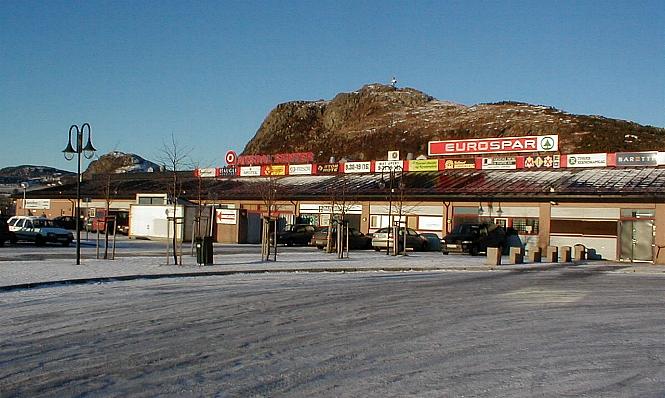
Aksdal Shopping centre.
I cut my teeth at places like Aksdal Senter. A shopping mall in a tiny village not too far from where I grew up, not so much a village as a cluster of houses next to the intersection of highway that goes to Stavanger and Oslo. Doing those shows strengthened the Funny Bones I now stand on. But I wanted more than that. I took the lessons and moved on. I found my own style, it took a long time, but I found it. And if I can find it, anyone can.
As the song says: "If you can make it here, you can make it anywhere."

(Although said about a slightly bigger city than Aksdal...)

Inspiring words from Austin Kleon. Worth checking out!

Here is a key excerpt from the gloriously enlightening movie Funny Bones about this particular issue of borrowing to get a head start and the terrible fact of life that many of our fellow performers never goes beyond this initial Novice Showman stage. They never find a Master, a mentor that can take them under their wing and show them the ropes, to make them Apprentice Showmen. On our own we stumble blindly in the dark. Learning and to some extent stealing from our idols can make us who we are. But the important thing is to steal like an artist: copy, combine and transform. Don't rip off.

The following is a conversation between Oliver Platt as Tommy Fawkes as he learns that his dad, Mr Originality himself stole material. The father is played by Jerry Lewis.

 
Mr Originality stole material?
"Why did you steal their whole act?

Because you loved them so much?"                  

"No, because I wanted a new act

that no one had seen in the States.                  

I was ambitious. Is that a crime? 

Did you never steal material, son?                  

I knew their act.

It was a way in for me. Just a way in.                  

I did it a couple of years,

then I became a joke man.

Let me tell you something straight.
Tommy Fawkes in his fathers footsteps.
 
About what kills me.                  

It kills me that I got lazy,

using writers, not using me.                  

We were funny! We didn't have to tell

funny stories. We were funny.

We had funny bones!                   

And what kills me most is watching

my own son flop time after time.                  

However much I spent on writers and

coaches, it hasn't worked for you.                  

It's like you're too educated

to be funny.                   

All this analysis. I did that!                 

There are two types of comedians.
                
A funny bones comedian,

and a non-funny bones comedian.             

They're both funny.

One is funny, the other tells funny.                  

And Tommy...
 
It's time you knew...and this

kills me the most,                

You're not funny."

Tuesday, 14 February 2012

Originality

“Originality is nothing but judicious imitation. The most original writers borrowed one from another. The instruction we find in books is like fire. We fetch it from our neighbor's, kindle it at home, communicate it to others, and it becomes the property of all.”
Voltaire

A while back a friend told me he really liked one of my ideas in an act I perform. It was a particular apparatus I had been developing over a three year period starting in early 2002. I thanked him. Then he told me he was going to make one for his own show. I said nothing. He asked me if it was OK. I said I didn’t feel good about it, but didn’t know what I could do to stop him. Now it is part of the finale in his show.

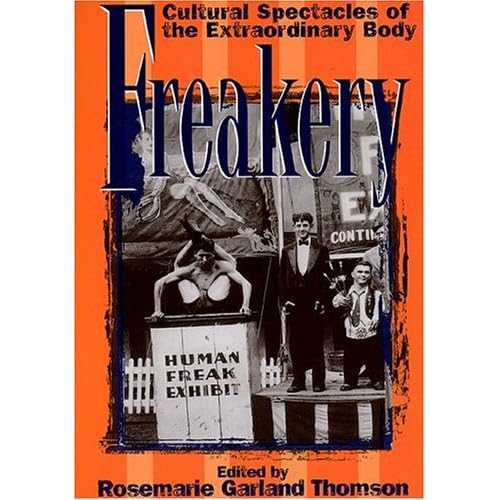
I collect and read circus books. The main part of the act my friend liked, the main skill, not the apparatus I perform the skill on came from a book. The book was a celebration of Robert Ripley, the man behind the world famous Ripley’s Believe it Not. The picture was of a man who could sit on a whiskey glass, with his legs behind his head. I later saw the same trick on a postcard where a man, calling himself Uncle Sam, sat on a little perch in the same posture. A man in almost the same posture, though not actually balancing but holding on, featured on the cover of a book called Freakery: Cultural Spectacles of the Extraordinary Body. Let alone that the feat has been "performed" within the Yoga tradition for who knows how long.
B K S Lyengar.
So in the end I had also “borrowed” something to create that act, even if I had specifically “dreamt” up the apparatus I performed it on. Does this mean there are no original acts?
Perhaps not.
But still people who see me get the feeling I am presenting something new and original, yet steeped in the Showman's Tradition.
I do think my act is original, but to understand this we might have to look a little closer at what that actually means.
In my presentation of the act: the music, specially created for the act by a fellow artist and dear friend Mikelangelo, gives form and structure to the flow of the act; a sequence of tricks mastered over the years;
my physicality; my visual gags; my running gag of confetti throwing;
and the final Dream Schpiel I deliver upon reaching the summit of the can stack - this symphony of elements united makes my act original. Not because the elements each sprouted into existence in a vacuum, but in their novel recombination and in my unique execution of it all.

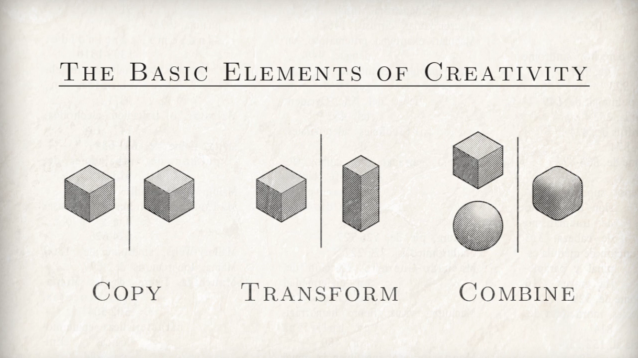
For a long time I have been saying that if someone claims to have created something genuinely new, they just haven't studied history enough. This does not mean that there are no new or original acts created, on the contrary new and novel combinations and evolutions appear all the time, but what is seen as new by crowds are sweet remixes of the great showmen of the past - whether the creator knows it or not.


(Pic from Brain Pickings via Everything is a Remix.)

(There are more episodes of this excellent exploration of originality and creativity over at Kirby Ferguson's blog Everything is a Remix and they are all worth checking out.) 

On a whole, Crowds ("common man") have problems with that which is totally new. People like the idea of newness and novelty, but they do seem to prefer it if the "new" is firmly placed within some recognizable framework. But within a framework or tradition the very thing that makes it a tradition is the shared evolution of the idea or art form. Each new creator is borrowing from the same language and the same ideas. So to think of something brand new within a tradition is a contradiction.
Further, there are two sides to originality: 
- One, favored by the Crowds, is newness within a tradition: original, cutting edge, fresh. 
- The second is absurd or irrational newness: mad, freaky, aberration, kooky.

At the end of the second half of the last century I traveled as a street performer and one of my main obstacles was the inherent freakishness of my contortions and dislocations. As I bent and twisted, parents covered their children's eyes or simply walked away. Of course the children never had a problem with it. To them I was just like a character from any one of their favorite cartoons. I worked hard on my performance style and presentation and slowly but surely I found a slapstick, happy go lucky attitude which made the crowds tolerate my freakishness. Inspired by Keaton, Chaplin, and Arbuckle, what had been freaky fell within the framework of a tradition which crowds seemed to enjoy enough to stay for, and as I used to say in my street show: A show worth staying for is worth paying for. 
(Of course Freakishness is a tradition in itself. Freakshows and Sideshows was where I found my feet as a performer fresh out of my Magician Fathers wings, but that is a different story.)
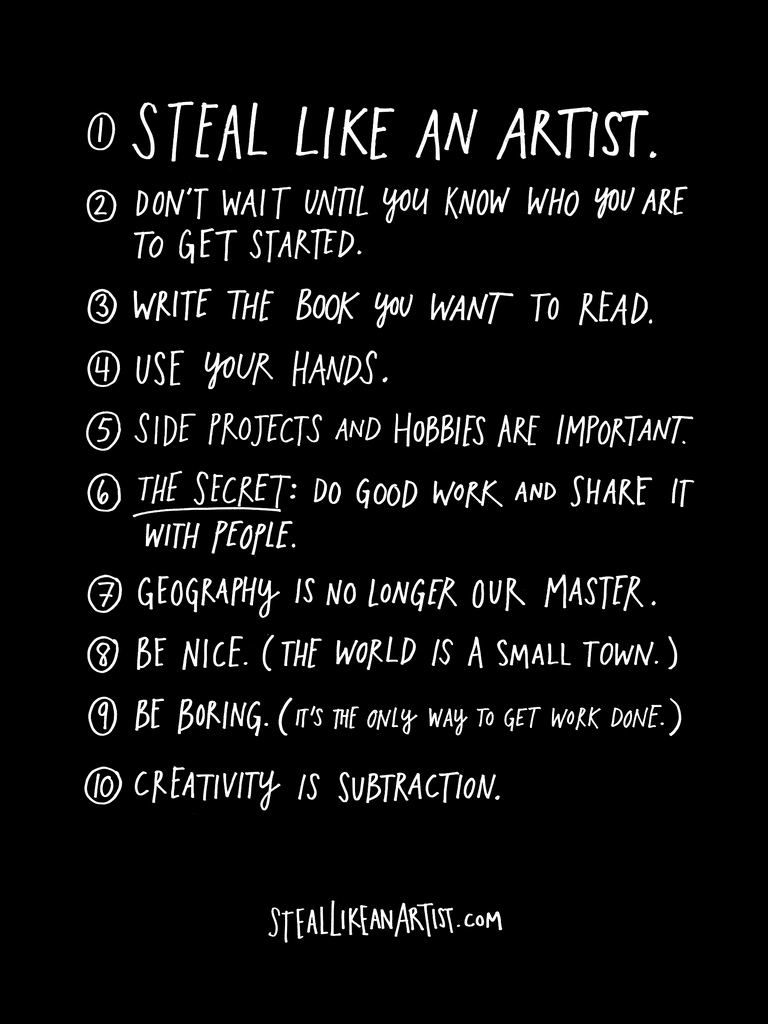
 “Nothing is original. Steal from anywhere that resonates with inspiration or fuels your imagination. Devour old films, new films, music, books, paintings, photographs, poems, dreams, random conversations, architecture, bridges, street signs, trees, clouds, bodies of water, light and shadows. Select only things to steal from that speak directly to your soul. If you do this, your work (and theft) will be authentic. Authenticity is invaluable; originality is non-existent. And don’t bother concealing your thievery - celebrate it if you feel like it. In any case, always remember what Jean-Luc Godard said: “It’s not where you take things from - it’s where you take them to.” 
Jim Jarmusch.
If originality is 'merely' clever recombinations of old ideas, emotions and techniques what then is it that makes certain art and artists feel so new and 'original?' I think the answer lies in the artist's ability to make his material ring true in the hearts of Crowds.
Great art resonates with people. It stirs emotions and connects the beholder with ideas sublimely expressed by the artist in a way that feels new, illuminating and most importantly truthful. Truth is not something that is, but something that happens, an individual experience in the beholder.
Truth is only expressed through art  when it speaks to a Crowd. If it works it becomes truthful, undeniable and beautiful. A truth of this nature creates some sort of change in the viewer. A change in the way they perceive the world, or simply bringing forth a very specific or sublime emotion. The better the artist is at communicating with the Crowd, the more original the Crowd's experience becomes, and hence the more original the artist is perceived to be.

By reading circus books and studying the history of Showmen past and present, I am hoping to become the Showman of the future, the New Old School. 
"If I have seen further it is by standing on the shoulders of giants."
Isaac Newton (from his days as an acrobat in the Sideshow.)