
"Show me how you do that trick
The one that makes me scream" she said
"The one that makes me laugh" she said
And threw her arms around my neck
"Show me how you do it
And I promise you I promise that
I'll run away with you
I'll run away with you"
Just like Heaven, the Cure.
Trust me,
You don't want to know.
If you want her to love you,
don't tell.
A revelation for the unprepared
is disappointing enough
to make grown men weep.
I am the son of a magician.
A Showman, and
I know
many secrets.
Trust me.
I show a lot.
I tell a lot.
But I keep secrets.
For I know their true nature.
Fragile and necessarily arcane.
Their existence depending
on not being known.
Their energy, their force,
their power, potency and fuel
is mystery.
Knowing can kill Mystery.
The journey is the goal. It is on the Way somewhere we are happiest. All hopes and dreams yet unfulfilled, everything still untarnished by the clash of reality versus dreams and hopes. With curiosity piqued we have direction and fulfillment. Seeking rather than finding drives us onwards. Mystery is the fire of the human engine.
The quest to be the first man to reach the Southpole, the gargantuan struggle of the journey there and the arduous way back, was the challenge and the goal.
The Pole itself was just a symbolic geographical location. There was nothing at 90º South that was not found anywhere else in the Antarctic. It was all about the Journey.
Could man make it? Could man survive? That was the Mystery.
As it turned out it was almost impossible, but a few Norwegian men succeeded where the power and prestige of the English Empire failed. As it was with the North West Passage, so it was with the Southpole.
But what did we learn from this achievement? What did they bring back? Not much in terms of artifacts, but what Amundsen's team brought back, which Captain Scott didn't, was themselves. Without yourself, you have lost it all. No more journey for you to enjoy...
A small group of men went away dancing into the arms of death, perilously close to following him home, but just smart and imaginative enough to avoid his final advances.
Amundsen and his men returned changed. They wanted to know. Life up until then had been building up towards this. After the goal was achieved some of the men became reclusive, one of them even committing suicide. What did they learn out there in the white wilderness? Were they ready to disrobe the mystery and could they handle the knowing?
"Mystery is a Magnet. Whenever there is something that’s unknown, it has a pull to it. When you see a part, it’s even stronger than the whole." David Lynch.

Those who ask to know the secret after seeing a magic trick don't know what they are asking. A magician never tells, because he knows truth can hurt.
The spectator just seeks a cheep thrill, a quick satisfaction of a whim to stave off boredom for another five minutes. The magic trick, the exquisite illusion was impossibly beautiful and genuinely surprising, it created a moment of true astonishment. Does it not then follow that the secret behind the Mystery is even more astounding? Unfortunately not.
The beautiful thing about a secret is the Mystery it creates, not the Mystery it is.
For a Magician, the secret method is only awesome as potential for creating astonishment in a crowd.
Perhaps this is why it is so hard, for so many, to have great mystery explained. Why are there so many species? Why do we believe in strange things? What was the origins of life? Is there anything supernatural out there? If yes, what? Telepathy? Homeopathy? Do we deny explanations because most of us aren't ready to have Mystery unveiled?
 An understandable and rational explanation is not immediately satisfying to our stone-age minds. We cling to creation myths and notions of biological developments of irreducible complexity, because having a secret told when we aren't ready really hurts. Secrets can be weapons. There is power in wielding them, not just in the
illusions they can create, but in the illusions they can shatter.
An understandable and rational explanation is not immediately satisfying to our stone-age minds. We cling to creation myths and notions of biological developments of irreducible complexity, because having a secret told when we aren't ready really hurts. Secrets can be weapons. There is power in wielding them, not just in the
illusions they can create, but in the illusions they can shatter.
In his mystic poem 'The Augaries of Innocence," William Blake describes this:
"A truth that's told with bad intent, beats all the lies you can invent."
With great secrets comes great responsibility. I think Spiderman said that.
Only with the right preparation will a secret be seen for what it is. An acolyte in a secret society, such as the Showman's Guild, would never be initiated before he was ready. Part of the role of the Master Showman was to know when his Apprentice was ready to know. Nothing must be told before its time. If the acolyte wasn't ready, the secrets would fall on infertile soil and could shrivel and die. Like any seed the gardener must know that the soil is ready to receive a seed before planting.
What prompted this post was a desire to know what Mystery was.
As I continue my quest to understand the similarities and differences of Shamans and Showmen, Mystery keeps popping up. As the Shaman became Showman the Mystery at the heart of the performance disappeared. It got lost in popular performance, in Showbiz. No longer did the individual tricks and rituals point towards anything beyond the entertainment. This is what books on the subject of shamanism, showmanship, ectstatic and mystery religions seems to think. They all speak about the Mystery as a phenomenon, and I keep thinking: What was that Mystery?
Trust me, you don't want to know.
The method
is never as beautiful as the illusion itself.
The illusion points
to something bigger than us,
the always out of reach,
the mystery at the heart of nature.
The ever expanding unknown,
the Hydra of unsolved puzzles.
With every secret unlocked and understood
two new ones appear.
There will always be the unknown,
the Mystery will always be there,
on the edge of what we know.
For each step we take up
we see a little more
of what we don't know
yet.
In this shadowy no-man's land
the seeds of Imagination (the supernatural)
will always sprout.
Perhaps in the end
the nature of Mystery,
the core of a Secret,
Is simply not knowing?
The one that makes me scream" she said
"The one that makes me laugh" she said
And threw her arms around my neck
"Show me how you do it
And I promise you I promise that
I'll run away with you
I'll run away with you"
Just like Heaven, the Cure.
Trust me,
You don't want to know.
If you want her to love you,
don't tell.
A revelation for the unprepared
is disappointing enough
to make grown men weep.
I am the son of a magician.
A Showman, and
I know
many secrets.
Trust me.
I show a lot.
I tell a lot.
But I keep secrets.
For I know their true nature.
Fragile and necessarily arcane.
Their existence depending
on not being known.
Their energy, their force,
their power, potency and fuel
is mystery.
Knowing can kill Mystery.
The journey is the goal. It is on the Way somewhere we are happiest. All hopes and dreams yet unfulfilled, everything still untarnished by the clash of reality versus dreams and hopes. With curiosity piqued we have direction and fulfillment. Seeking rather than finding drives us onwards. Mystery is the fire of the human engine.
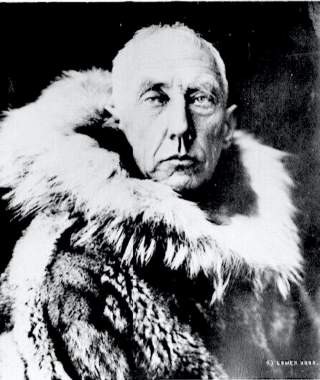 |
| Roald Amundsen |
The Pole itself was just a symbolic geographical location. There was nothing at 90º South that was not found anywhere else in the Antarctic. It was all about the Journey.
Could man make it? Could man survive? That was the Mystery.
 |
| Hjalmar Johansen |
But what did we learn from this achievement? What did they bring back? Not much in terms of artifacts, but what Amundsen's team brought back, which Captain Scott didn't, was themselves. Without yourself, you have lost it all. No more journey for you to enjoy...
A small group of men went away dancing into the arms of death, perilously close to following him home, but just smart and imaginative enough to avoid his final advances.
Amundsen and his men returned changed. They wanted to know. Life up until then had been building up towards this. After the goal was achieved some of the men became reclusive, one of them even committing suicide. What did they learn out there in the white wilderness? Were they ready to disrobe the mystery and could they handle the knowing?
"Mystery is a Magnet. Whenever there is something that’s unknown, it has a pull to it. When you see a part, it’s even stronger than the whole." David Lynch.

Those who ask to know the secret after seeing a magic trick don't know what they are asking. A magician never tells, because he knows truth can hurt.
The spectator just seeks a cheep thrill, a quick satisfaction of a whim to stave off boredom for another five minutes. The magic trick, the exquisite illusion was impossibly beautiful and genuinely surprising, it created a moment of true astonishment. Does it not then follow that the secret behind the Mystery is even more astounding? Unfortunately not.
The beautiful thing about a secret is the Mystery it creates, not the Mystery it is.
For a Magician, the secret method is only awesome as potential for creating astonishment in a crowd.
Perhaps this is why it is so hard, for so many, to have great mystery explained. Why are there so many species? Why do we believe in strange things? What was the origins of life? Is there anything supernatural out there? If yes, what? Telepathy? Homeopathy? Do we deny explanations because most of us aren't ready to have Mystery unveiled?

In his mystic poem 'The Augaries of Innocence," William Blake describes this:
"A truth that's told with bad intent, beats all the lies you can invent."
With great secrets comes great responsibility. I think Spiderman said that.
Only with the right preparation will a secret be seen for what it is. An acolyte in a secret society, such as the Showman's Guild, would never be initiated before he was ready. Part of the role of the Master Showman was to know when his Apprentice was ready to know. Nothing must be told before its time. If the acolyte wasn't ready, the secrets would fall on infertile soil and could shrivel and die. Like any seed the gardener must know that the soil is ready to receive a seed before planting.
What prompted this post was a desire to know what Mystery was.
As I continue my quest to understand the similarities and differences of Shamans and Showmen, Mystery keeps popping up. As the Shaman became Showman the Mystery at the heart of the performance disappeared. It got lost in popular performance, in Showbiz. No longer did the individual tricks and rituals point towards anything beyond the entertainment. This is what books on the subject of shamanism, showmanship, ectstatic and mystery religions seems to think. They all speak about the Mystery as a phenomenon, and I keep thinking: What was that Mystery?
Trust me, you don't want to know.
The method
is never as beautiful as the illusion itself.
The illusion points
to something bigger than us,
the always out of reach,
the mystery at the heart of nature.
The ever expanding unknown,
the Hydra of unsolved puzzles.
With every secret unlocked and understood
two new ones appear.
There will always be the unknown,
the Mystery will always be there,
on the edge of what we know.
For each step we take up
we see a little more
of what we don't know
yet.
In this shadowy no-man's land
the seeds of Imagination (the supernatural)
will always sprout.
Perhaps in the end
the nature of Mystery,
the core of a Secret,
Is simply not knowing?


