Friday, 4 November 2011

Lessons from the Way of the Showman - 52


"The rise of modern showbiz began during the seventeenth century, alongside the beginnings of a decline in the power of the Church. It was no coincidence. Prior to that time, the people's entertainment was despised and repressed by the ecclesiastical authorities. Their attitude did not change, they just gradually lost the power to enforce their prejudice. What was it about the medieval jugglers, minstrels, acrobats and rope-dancers that the Church found so objectionable? Did the churchmen suspect that these merry pleasures were the left-overs of an older religion, the remnants of ta once powerful and ancient magical tradition?"

"In order to penetrate the mysteries of showbusiness, we must begin somewhere near the beginnings of human culture. For modern showbiz is, in reality, a huge disguise. It is not as it appears to be..."

Rogan Taylor

Thursday, 3 November 2011

Carnival Lullaby


All the world has gone to bed
and the fairground lights gone dead.
Little child its time to sleep,
the night is no reason to weep.

The strongman is drunk and passed out,
nuzzling the sea lions snout.
The Siamese twins called Ying and Yang
slept before the church bells clang.

Sleep my child don’t be afraid.
Rest your head on the pillows brocade.
If you sleep to night I promise true
the world will still be there for you

Don’t believe what the mad jester said,
dear child you’ve been mislead.
The world will go on without end
even if you sleep my friend

For the night is a time for dreams
when nothing is what it seems,
carousel horses flies through fairy floss clouds
high above the crowds

Sleep my child don’t be afraid.
rest your head on the pillows brocade.
If you sleep to night I promise true
the world will still be there for you.


The Happy Sideshow

From the now defunct Happy Sideshow website...

"The Space Cowboy, Shep Huntly and Captain Frodo had been talking about a name and wanted one that could describe the awesome energy that was created when we performed together. It became evident what it would be during the Lizard festival for the total eclipse of the sun in 1999 in Cornwall, UK, where the dudes were booked to perform and Tigerlil was along for the ride. After arriving and doing solo shows for two days the management called a meeting to tell us that there was no chance the festival was going to make it financially. There was not enough paying custumers. This meant none of the performers would get paid. A lot of the performers and bands cracked the shits. There was a whole lot of shouting, threats and bad vibes all around. At which point Captain Frodo raised his hand and asked the flustered organizers:
"If we all decide to stay and entertain those few thousand people that are here, will the ecclipse still be on?' This broke the ice.
The birth of The Happy Sideshow
photo by Tigerlil.
The three boys decided against doing solo street shows and in a collaborative evening with Howard Marks, The Happy Sideshow was born in a cabaret big top in Cornwall during a total ecclipse of the sun.
From then and for the next four or five years the Happy Sideshow consisting of Tigerlil, the Space Cowboy, Shep Huntly, and Captain Frodo toured the world with their sideshow revival under the slogan "The coolest, Slickest, and Happiest Sideshow on Earth!" The hyperbole was right, as the Way teaches us - with theater less is more, but with sideshow less is not enough.


From the archives of Carnival Cinema comes an almost complete performance of a show called "Torture for Fun." The show was filmed in Stockholm, Sweden in 2003 during Circus Cirkors circus festival called subørb.


Lessons from the Way of the Showman - 51

People love mystery. In performing magic there are two types of mystery involved.
On one level is the Great Mystery, the magical experience, the uncanny, the other, the mysterious deep feeling of experiencing something unknown and unfathomable.
The other level is more superficial, it is the technical question of how something was done. A whodunnit murder, a puzzle, or a card trick are all mysteries seeking to be solved.
A magician, or indeed any Showman, should ask themselves what level they are encouraging their audience to experience their performance on. A performance at its best can function to symbolically awaken us to other realms of experience.

Ask yourself what you are expressing with your acts.

Saturday, 29 October 2011

Lessons from the Way of the Showman - 50

A Showman relishes reactions. Genuine reactions, not mere polite applause. He often values the reactions over the show itself. For in those moments of true response his art simultaneously becomes meaningful for him and the individuals in the Crowd, in this unity lies all the power and all the glory.

Monday, 10 October 2011

Lessons from the Way of the Showman - 49

When you have developed a skill try making it more meaningful than pure demonstration. If you have the crowds attention why not say something that matters.
Think of your act symbolically. Let it point to something greater than "I can sit on a can."

Sunday, 9 October 2011

Lessons from the Way of the Showman - 48

Develop and foster real relationships.
Cherish your family.
Seek perfection and beauty of course.
But remember good shows are no consolation for a lonely life.

From the Illuminated mind of MS Shep Huntly.

Saturday, 8 October 2011

Lessons from the Way of the Showman - 47


You set the pace of your onstage reaction patterns. If you slow down it is easier to think.
If you slow down its easier for the Crowd to read you and they feel smarter than you. Which is good for a clown.

Lessons from the Way of the Showman - 46

Your ideas ripen and grow when you least expect it. In times of rest and in good conversation great ideas grow. Carry a notebook! The wording that flows so well when asked at a party is often gone by the morning.

Wednesday, 5 October 2011

Circus Baobab

The first africa acrobatic circus created in 1998 in Guinea-Conakry a country in West Africa. With some help from the late great Pierot Bidon from Archaos fame. A circus road movie from an amazing team of acrobats and circus folk traveling through Africa with all that entails. Building their stage and flying trapeze rig from tree trunks, using old truck tires for mini tramps, high energy drumming, dance and acrobatics. Awesome music, awesome experiences and awesome reactions from the crowds as they drive their trucks through village streets and fill arenas.
Grass roots circus for the people. A phenomenon that changes peoples lives.

See Laurent Chevallier's full documentary here.

Tuesday, 4 October 2011

Lessons from the Way of the Showman - 45

When you are three quarters through a long season and the crowd is small imagine the show is the first or the last. Make it special in your mind.

Lesson provided by MS Shep Huntly.

Friday, 30 September 2011

Shaman Showman - part 3

The Shaman-Showman's Obligation


Wikipedia tells us: Shamanism is an anthropological term referencing a range of beliefs and practices regarding communication with the spiritual world. There is a lot of research done by anthropologists and religious historians like Mircea Eliade that explores this line of thought. Daniel Pinchbeck defines Shamanism as “A technology for exploring non-ordinary states of consciousness in order to accomplish specific purposes: healing, divination, and communication with the spirit realm.”
Personally I don’t believe there is any need to postulate a spiritual world as a separate realm of existence to explain phenomena in this world. I believe the answers to our questions and mysteries lies firmly rooted in reality. Explanations given along supernatural lines only complicates things and raises more questions then it answers. In my writings I am treating the shaman as a guide for an exploration of non-ordinary states of consciousness or an altered experience of reality. Lessons learnt in this state of mind does not teach us about the spirit world but about ourselves and our place in the real world.
I believe the shamanistic tradition and experience has been important for humans for the same reasons as religion. The beneficial traits of these traditions has worked to strengthen unity, binding communities, finding meaning in complex things by providing answers to unexplainable things, and it exists throughout the world, most likely because it’s positive effects are real, regardless of the ultimate veracity of the teachings. I will get back to these underlying positive effect in another post.
Blogger Tai Carmen describes the shamanistic state eloquently in a great post on her blog: “A systematized disorganization of the senses via trance states induced by intoxicants/hallucinogenics, music and/or dance, with the goal of personal transformation/liberation from social constraints, and communion with a divine or supernatural principal. ”
The tools of the trade seems to be drums, chanting, and also demonstrations of supernatural skill. All employed to bring the participants a state of ecstasy. A word whose original meaning came from the Greek word Ekstasis, which means ‘standing outside oneself.’ He who stands outside himself would be able to see himself from the outside.
The mindset of the participants is described as a trance, but perhaps for those that can’t or won’t reach the full ecstatic state themselves watches the shaman as a representation of themselves. They watch the shaman as they watch themselves. He becomes man’s representative, the symbolic human.

A Showman Shows Man - Man. For a Showman, the altered state is the mindset of the Crowd. Their minds connected watching time slowed down and controlled by the Showman as he draws them into a symbolic reality, and leads them into Ekstasis in its original meaning, standing outside oneself to be able to watch and understand oneself.

Shamans are keepers of secret knowledge, they explain unexplainable events and increase the odds of survival and the moral in the group. They are the mediators between the spiritual or altered experience of reality and the real world. In this symbolic world order they find hope of control over stochastic processes in the real world.
The shaman manifests our dreams and collective imagination. They give hope. Hope of healing, hope of direction when lost and so on. Through his role as an outsider, a wounded healer, someone who has suffered and learnt, one who have gone out on the ice and lived there alone for many months until he could finally hear the voice of the Universe, have certain obligations to fulfil.
From BBC's Human Planet
From the TV series Human Planet I learnt that on coral islands where it is possible to fish within a lagoon as well as out on the open sea, fishermen are more superstitious about fishing out at sea. This means there are more rituals connected to the open sea variant. This is because added risks. Random uncontrollable processes like bad weather and dangerous prey increase risk of injury and death. The open ocean is a treacherous place and the beasts pulled up can be dangerous. The more random the process, the easier it is for us to become superstitious. Situations of gravity, such as open-sea fishing, or big game hunting would all bring on a desire to control the outcome, to gain an advantage and security in a very uncertain situation.
BF Skinners superstitious pigeon
 In risky circumstances where randomness is unavoidable normal pattern recognition no longer suffice and as demonstrated nicely by B.F. Skinners famous superstitious pigeons, our minds makes sense of unrelated events and outcomes. The pigeons belived that their actions such as wing flapping and turning was an important part of receiving food. The fact was that the food was delivered completely at random with no reference to the pigeon’s actions. When food was delivered the pigeon remembered its last actions and attributed it to the food delivery. And hence persisted to repeat the half turn, the wing flap and so forth it had done immediately before the food arrived. The pigeons quickly developed a set of beliefs to make sense of the randomness.
Minds were made to make sense of things and it is so eager to do so it often makes sense out of things that have no sense at all. Mistaking events following each other in time for causality, that the first event is linked to the next. Like linking a successful and injury free hunt to correctly following a groups rituals. If the ritual was executed and the ensuing hunt was successful and injury free it would be attributed to the ritual. The tribe now have ‘proof’ that the ritual worked. Once this thought pattern occurs it can be very difficult to escape. To the point that if someone did die in the hunt, the question would not be whether the whole system was wrong, but what alterations must be done to the ritual, which bit was not done well enough, which part of it failed. In this way a simple superstition can become a complex set of instructions meaningful within the community’s belief system.
Minds makes sense of things that have no sense at all.
Superstition aside, as I mentionioned earlier the veracity of the beliefs seems to be unimportant. The benefits from following religious practices and rituals are all equally helpful. We have yet to find one type of prayer that gives 100% return of your prayers. All rituals and spiritual traditions has similar outcomes so the important thing about them is that something about them ‘works’ for us as humans.
The shamanistic ritual before the hunt becomes a time for focus and for unification of the hunters and through them the whole tribe. It changes the mindsets from I to We and in that there is immense power. We are social beings, together we are invincible, together we will prevail, and together we shall grow. This is the obligation of the Shaman Showman.

Thursday, 29 September 2011

Lessons from the Way of the Showman - 44

When a Showman understands the role of the audience, a new freedom will fill him. Exhibitionism withers away when the Showman sees the audience not as judges or censors or even as delighted friends but as a group with whom he is sharing an experience.

Wednesday, 28 September 2011

Beyond the Mat

This is an awesome documentary about wrestling; the sport, the craft, the risks, the wrestlers, the passion, and the spectacle. Wether you love wrestling or don't get it this story will interest you.

Lessons from the Way of the Showman - 43


The most important thing is that you know that you want to be there and
that you trust the Crowd wants to be there.
They are the audience you are the performer. Step up, be the Showman. Let them be the crowd. Guide them, they want to follow, but are afraid to come with you unless they feel safe with you as a guide.

Tuesday, 27 September 2011

Shaman Showman - Part 2

Mythopoeic nature of Wrestling
Wrestling and Shamans

(Read part 1 here.)

Perhaps shamanism is like Pro-wrestling? As a kid you think it’s real then at some point you learn the whole thing is a masquerade. It is theatre in a square ring.
All the spectators suspends their disbelief, pretending to watch sport, whilst it’s actually theatre, sports-themed theatre of the simplest sort. Very powerful stuff though.
When an older boy decides to expose the lie, or initiate you into the true knowledge concerning the reality of wrestling, I hope they do it gently. As the house of childlike beliefs shakes and falls, you want the insight broken to you in a way that allows you to transcend the broken reality by picking up the pieces and stack them back up into a new foundation. A foundation of understanding and rationality.
Wrestling isn’t real but it's still awsome and this teaches us that wheter its real or not is not the point, the point is the story, the action, the hotdogs and soft drinks, the girls in the skimpy outfits, and the massive warrior wrestlers.
Real or not it still speaks to thousands.

Saturday, 24 September 2011

Lessons from the Way of the Showman - 42

It is necessary to become a part of the world around us and make it real by touching it, seeing it, and smelling it. This is valid for stage and life.

Shaman - Showman


Roald Amundsen and the Shaman

Roald Amundsen, polar explorer and hero.
One of Norway’s relatively unknown heros is Roald Amundsen. ”Who?” You probably think, and that’s my point.
Just so you all know, I’ll briefly introduce my childhood hero. On december 14 1911, Amundsen and his team were the first men to reach 90 degrees south - the geographic Southpole! To make the story even more exciting the quest for the Southpole had been a race against an English man called Captain Robert Falcon Scott. So if he won why don’t we know his name?
Captain Scott was quite a hopeless case. He brought horses and tractors to take him to the pole. The tractors never started and the horses died of exposure before the expedition set off towards the pole and Captain Scott’s team reached the pole finding a tent with a swaying Norwegian flag. In the tent was a guest book, with Roald Amundsen’s name first. With broken spirits Scott began the return journey but succumbed to fatigue, partly brought on by scurvy. The tragedy of Captain Scott ecclipsed Roald Amundsens acheivement.
Reaching the Southpole was not Amundsens first polar triumph. A few years earlier in 1903, and this brings me to the point I am making, Roald Amundsen set out on an expedition hoping to find the North West Passage. Which had been sought by the English for four hundred years. They sailed to Gjøahavn on King William Island and spent twenty three months there. During this time Amundsen studied Inuit way of life and collected etnographic material.
I found this quote on a blog about Amundsen’s encounter with an Inuit Shaman. This will be a perfect introduction to my thoughts and ramblings on shamans.

Amundsen and his men at the Southpole
”Roald Amundson passed the winter in the Arctic Circle among the Inuits.  He lived with the tribe’s shaman.  After months of watching the many sleights of hand and minor tricks the shaman used to hold the tribe’s attention with his magical power, Amundsen finally asked him: Didn’t it bother him that all his ‘magic powers’ were nothing but  cheap parlor games?  The shaman smiled. He replied, ‘My magic power is not in my tricks. My real power is that I have gone out on the ice and lived there alone for many months until I could finally hear the voice of the Universe. And the voice of the Universe is that of a mother calling after her beloved children. That is my real magic.”

Inuit Shaman. Look at those sweet hands.
This brings us to shamans and my interests in them as proto Showmen. Roald Amundsen experienced a shaman performing slight of hand. To his tribe the shaman was a powerful healer and communicator of secret understandings. What did the tribe see in their shaman’s prestidigitation? What can we learn about the Showman from studying the Shaman? What can we learn about his craft and the deep meaning presented in his performances that will benefit our own shows? How did it all start?

Whether because of his understanding of ice and polar knowledge taught to him by shamans or not, the expedition found and sailed through the North West Passage in 1906. Becoming the first ship in history to travel successfully through it. Adding another feather to my polar hero, Roald Amundsen’s hat.

(Read part 2 here)

Friday, 23 September 2011

Shanghai Circus School Doco


I went to a circus school in 1996. I paid for the three-month course with money I had made performing with Dad and doing street shows. Let me just say Circomedia was nothing like the Shanghai Circus School.
The kids in this PBS documentary are pushed to the edge and beyond. The results are extraordinary, pinnacles of human achievement in body control, but so I would hope, for the sacrifices and struggles are great. But in the end when you have mastered your craft, created your art and overcome the obstacles the triumph of the Showman makes it all worth it.
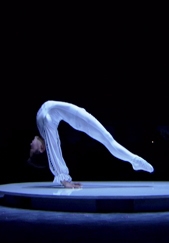
The documentary is hard to watch sometimes, but these kids are amazing. The kid in this picture fights hard, they push him, but man, the results are unbelievable.

Hope you all enjoy this glance of the work involved in becoming an Acrobat. 
Thanks to Circobat over at the Kicking Sawdust blog for putting me onto this.


Watch the documentary on youtube by clicking here.

Lessons from the Way of the Showman - 41

Everything that happens on stage is part of the show. The act, the mistakes, the random interactions from the crowd are all part of the Crowds experience. Each opportunity missed is a brick in the fourth wall. Sealing you off from the crowd, driving them out of the moment. Enjoy your mishaps, they make you more human, and the performance more real.