Since the dawn of humanity clowns have danced a closely intertwined dance with truth. This dance is a fundamental feature of their timeless attraction. Truthfulness is, behind the mask of grotesque ridiculousness, what makes a clown. When a clown comes from a place of authenticity the clown can say things others wouldn’t dare.
 The clown is a liminal character, polarized between the lowest social standing and a unique position of receiving attention, which in and of itself is a form of social status. Attention not just from common people but also from the rich and powerful. In medieval times the court jester was a clown in service of a King or some other elevated noblemen. In this role jesters had unique access to, literally, the most powerful persons in the land. On top of that he had a unique permission to speak the truth.
The jester’s freedom to mock or contradict rulers is described in records from all over the world, throughout history. India, Persia, China, and Europe all had their own versions of it. Aztec regent Montezuma II (1502-20) said of his jesters: “They frequently pronounced some important truths,” and in Erasmus’ (1469-1536) Praise of Folly he writes: “They’re the only ones who speak frankly and tell the truth, and what is more praiseworthy than truth?”
We must assume Kings were fully aware of this aspect of their fools role. So they would take great care in selecting their court jester. To gain the privilege, of being taken care of and to possibly assert influence, the clown had to deserve it. Only masters of their craft would have gotten the honor of becoming court jesters. They would have had to be able to improvise and have a broad palette of skills to draw upon and combine as they in essence would perform to the same crowd repeatedly. Obviously they would also have to be compatible with as well as being stimulating to the individual King’s humor, taste, and temperament.
 From the Jester or Clowns point of view an important part of their education and development is to discover and develop a truthful representation of themselves. A character which can fall down, juggle, sing comic songs, tell stories or what have you, and come across as being truthful and himself through it all. They need to be able to pretend without pretense.
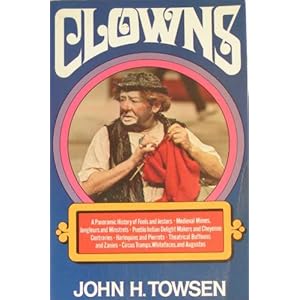
“The clowns who are masters are themselves. They make something wonderful out of who they truly, deeply and simply are. They don’t hide or conceal themselves in clown character, to appear as someone else, or someone good, or someone right. Yes, they borrow routines, shtick, and ideas from one another and their predecessors, and, true, they frequently belong to a long performance lineage and have learned, as apprentices, specific techniques that perpetuate a certain tradition. And yet whatever material they perform, whatever character they present, they enter into their clown persona as a way of being more generously themselves than they might be under usual circumstances. Every time we watch one of them, we don’t view a form or a character or a concept. We see, simply, them.” (Ezra LeBank and David Bridel, Clowns: In conversation with Modern Masters.)
There were of course particular, if unwritten, rules for the way these transgressive expressions of truth could be presented. Guised in silliness, displayed and expressed from a grotesque and lowly state of dignity, the King would be free to take from it what he wanted and discard the rest as jest and absurdity. If the King sifted out a grain of truth from the jesters rants and chose to take the it to heart it was more likely for the grain to fall on fertile ground.
The jester could speak truths, but the telling of truth is not just a matter of stating facts. “Earth is not the centre of the solar system,” might have been a fact when it was first uttered, but it was not experienced as such by the vast majority. The type of truth best expressed by jesters and clowns is not factual truth, what German film maker Werner Herzog calls “accountant’s truth,” but rather what he calls “ecstatic or poetic truth.”
“If facts had any value, if they truly illuminated us, if they unquestionably stood for truth, the Manhattan phone directory would be the book of books.” (Werner Herzog. A Guide for the Perplexed.)
Facts might reflect objective reality, but they do not illuminate. Only truth illuminates. Poetic truth is an experienced truth, greater and more powerful than any fact. It is a process of communication where a recipient experiences someones expression as a deeper and more visceral truth. Poetic truth is not separate from human participation. It is not something which is, it is something which happens between humans. Poetic truth is artificial, meaning “made or produced by human beings rather than occurring naturally, typically as a copy of something natural.” (New Oxford American Dictionary.) A poetic truth is fact artificially crafted to make emotional connection.
For poetic truth to happen there needs to be trust between the presenter and the receiver. The King would have to trust his fool. For this trust to develop the fool had to express his self. If the King felt his jester spoke the opinions or truths of ministers or bishops, chances are the fool would have his privilege revoked, possibly by having his tongue ripped out or head chopped off.
 The process of telling truth is a delicate business. As a clown attempts to do so there is always risk. Risk of failure. Not the kind of failure which is mimicked in a clown’s performance, which in actuality is only imitation of failure so well crafted it really is a success, its rather a failure of communication, failure of connection and understanding. If any of these three factors fail; the truthfulness of the clown, the particular truth expressed, or the King’s experience of either, the clown risks death. The historical jester who’s truth broke down could probably face literal death. Todays clowns risks dying on stage. Certainly not as bad as death, anyone who isn’t a clown would say. Yet, the clown’s truth is the clown’s soul. When a clown dies on stage the truth of his self fails, without which the poetic truth of his message can no longer happen. What dies, when a clown dies on stage, is his soul. Without it the clown is reduced to a soulless clown zombie. Wandering undead in greasepaint with a red nose being but an empty shell. A fate on par with death by royal executioner. (It’s zombie clowns like this, roaming shopping centers and birthday parties which is giving clowns a bad name.)
The truthfulness in the jesters persona is the key to his privilege as truth teller. When a clown successfully acts from his heart, the wellspring of poetic truth, truth can happen and rings true. In this subtle, yet powerful, process comes great power. Laughter and levity lowers the minds defense mechanisms, and as cynicism and distrust recedes, the listeners own heart becomes exposed, fertile ground. In such moments the heart of the jester can speak directly to the King’s heart and under these peculiar circumstances a lowly clown can plant a seed of poetic truth in the Kings heart. A seed which has the potential to sprout into governmental reform. If a clown whispers his truth to the King’s open heart, change becomes a possibility. Change of heart. Change of mind. Change of world.